
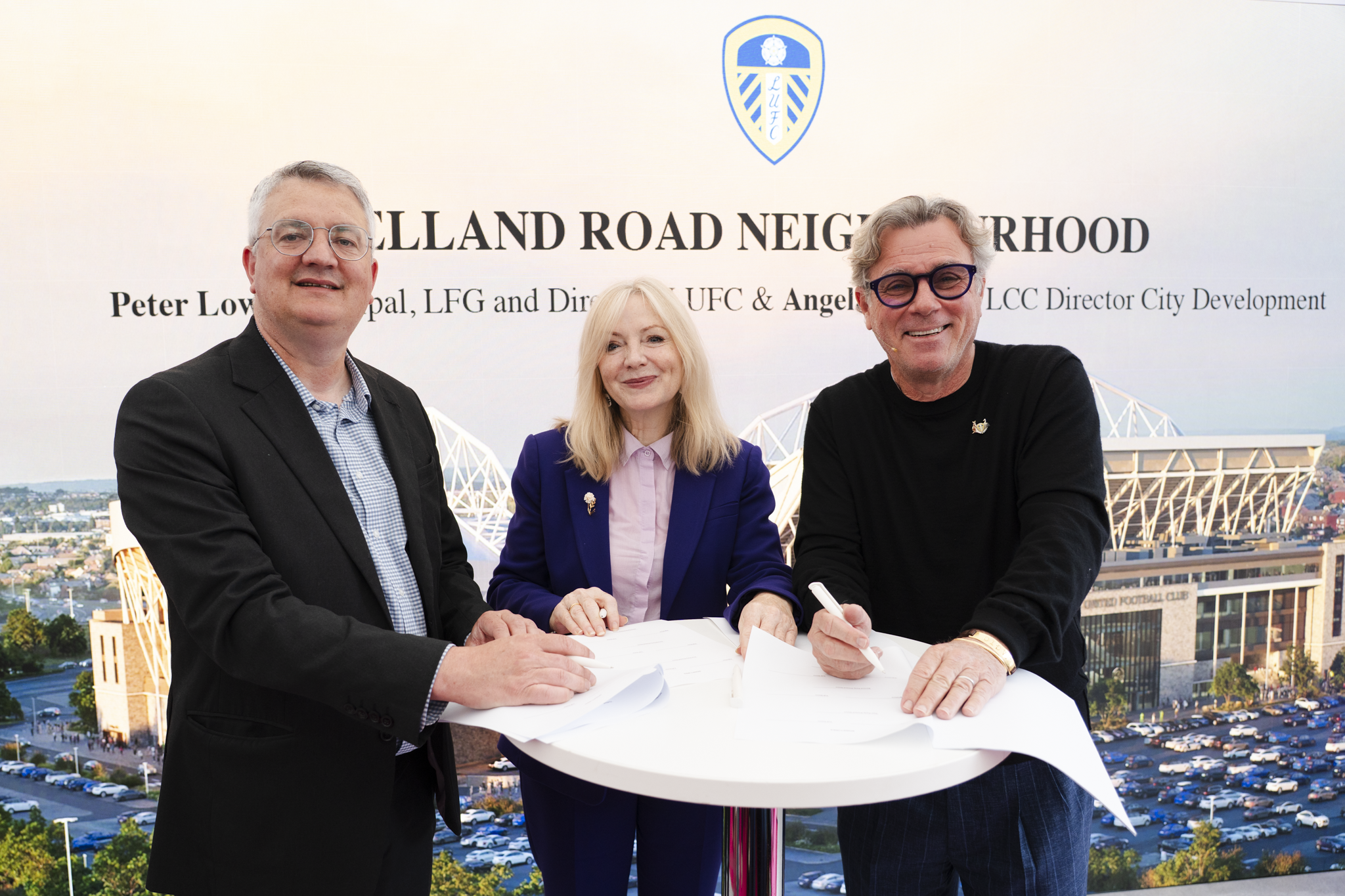
The establishment of the Leeds Mayoral Development Zone (MDZ), formally unveiled by West Yorkshire Mayor Tracy Brabin and Leeds City Council Leader Cllr James Lewis on 19 May 2026 at the UKREiiF conference (Source: West Yorkshire Combined Authority, Place Yorkshire), represents a structural pivot in how large-scale urban regeneration will be managed in West Yorkshire. Subject to final approval by the West Yorkshire Combined Authority (WYCA), the MDZ creates a single, highly coordinated delivery framework uniting the local council, the Combined Authority, Homes England, and central government (Source: West Yorkshire Combined Authority, Leeds City Council). The zone is designed to oversee the coordinated delivery of approximately 20,000 new homes, alongside extensive commercial space, public realm, and cultural assets, heavily concentrated across the Leeds city centre and the South Bank (Source: West Yorkshire Combined Authority, Place Yorkshire, westyorks-ca.gov.uk).
For property investors, developers, and institutional capital, the primary analytical takeaway is that Leeds is actively moving beyond fragmented, site-by-site brownfield development. By attempting to institutionalise its delivery pipeline, the city is aligning its local targets with major macroeconomic tailwinds. This institutionalisation is anchored by three national-scale catalysts: the city's shortlisting for up to 20,000 homes under the government's New Towns Draft Programme (Source: placeyorkshire.co.uk, gov.uk), a historic £2.1 billion regional transport investment package (Source: westyorks-ca.gov.uk, placeyorkshire.co.uk, gov.uk), and the strategic decision to headquarter the newly launched £16 billion National Housing Bank entirely within Leeds (Source: placeyorkshire.co.uk, gov.uk, caddickdevelopments.co.uk).
My central judgement is that the MDZ acts primarily as an administrative de-risking tool. It mitigates one of the most persistent risks in long-term regeneration: the chronic lag between residential construction and the civic infrastructure required to support it. By aligning planning frameworks, land assembly, and upfront state funding,evidenced by the concurrent announcement of a £16 million Homes England infrastructure grant to unlock the 1,925-home South Village site (Source: asianstandard.co.uk, news.leeds.gov.uk),the public sector is proactively absorbing the heaviest site-preparation costs. However, the execution risk now transfers to the absorption rate and the capacity of private-sector partners to build out the 20,000-home pipeline amidst prevailing macroeconomic variables, debt costs, and construction inflation.
The headline public offer is vast, yet it is supported by a remarkably consistent multi-agency narrative. The safest current reading of the MDZ's capacity is: up to 20,000 homes across the South Bank and wider city centre (Source: West Yorkshire Combined Authority, Place Yorkshire, asianstandard.co.uk); the delivery of the 8-acre Aire Park (Source: lsh.co.uk); the 2 million sq ft South Village neighbourhood (Source: southleedslife.com, reddit.com); the £160 million Armouries 700 Tiltyard expansion (Source: leedsliving.co.uk, publicsectorexecutive.com); the potential British Library North at Temple Works (Source: placeyorkshire.co.uk, GOV.UK); and the expansion of the Leeds Innovation Arc (Source: Invest Leeds). While individual plot tenures remain fluid, official materials suggest a diverse mix spanning open-market sales, build-to-rent (BTR), and a heavy emphasis on affordable housing, guided by the New Towns Taskforce's national recommendation of a 40% affordable target (with half designated for social rent) .
For the housing market, the most important analytical point is that the MDZ will likely exert a bifurcated effect. The baseline property market in Leeds remains accessible relative to national and southern averages, with a median property price of £237,500 recorded in February 2026 based on 491 completed sales. Within the immediate waterfront, park-front, and newly amenitised micro-markets (postcodes LS1, LS10, LS11), high-specification new-builds are highly likely to establish definitive pricing premiums over older city-wide stock. Conversely, at the macro-city scale, 20,000 homes represent a massive structural injection of supply. The broader effect over the 2030s should be to absorb natural household formation, easing acute supply shortages and moderating upward rent and price pressure relative to a no-development counterfactual, keeping Leeds economically competitive for retaining graduate talent.
2. Project overview
The Leeds Mayoral Development Zone covers a broad, strategically critical swathe of the city centre and the South Leeds Gateway (Source: Invest Leeds). It is not a single, fenced construction site, but rather an overarching governance and delivery framework that overlays several nationally significant, pre-existing masterplans, forcing them into a coherent, infrastructure-led sequence.
The governance of the MDZ represents a mature evolution of civic partnership. The zone will be overseen by a newly established, independently chaired board,initially chaired by Mayor Tracy Brabin for the first month during its inception phase,comprising senior executives from the Combined Authority, Leeds City Council, and Homes England (Source: West Yorkshire Combined Authority, Place Yorkshire). Operationally, this will be driven by a new multi-agency "Leeds Growth Team," led by the council, explicitly designed to create a "single public-sector interface" or "single front door" for developers and institutional investors (Source: Leeds City Council, Invest Leeds). This structure maintains local democratic planning powers while streamlining the funding and land-assembly coordination that typically paralyses large, multi-owner brownfield sites (Source: Place Yorkshire, Leeds City Council).
The MDZ functions as the physical delivery mechanism for the broader Leeds Economic Vision 2025–2035, a decade-long municipal strategy published in late 2025 . This vision is explicitly designed to grow the city's economy by £20 billion and create up to 100,000 new jobs (Source: leedsliving.co.uk). Rather than relying solely on residential volume to drive local GDP, the MDZ pairs housing targets with an aggressive commercial mandate. A core pillar of the Vision is to double the size of the city's Financial and Professional Services (FPS) sector,which already accounts for 40% of Leeds's Gross Value Added (GVA),aiming to create 50,000 new jobs and cement Leeds as the "Northern Square Mile" (Source: leedsliving.co.uk).
Crucially, the geographical footprint of the MDZ overlaps almost entirely with the Leeds South Bank, an area that has been officially shortlisted by the New Towns Taskforce for priority intervention . As one of the government's seven proposed locations in the New Towns Draft Programme, the South Bank scheme is uniquely positioned. Unlike traditional post-war new towns that relied on greenfield urban extensions (such as Milton Keynes), Leeds South Bank is an intensely high-density, brownfield, inner-city proposition (Source: gov.uk). Following a formal public consultation period that closed on 19 May 2026 (Source: gov.uk), a final government decision on the exact statutory status and funding package is expected in the summer of 2026 (Source: placeyorkshire.co.uk). If selected, the South Bank is targeted to see construction commence on an initial phase of 9,500 homes by spring 2029 , scaling to an eventual capacity of 20,000 homes across the wider zone (Source: placeyorkshire.co.uk).
3. Official scheme details and delivery timeline
The true scale of the MDZ can only be understood by examining its constituent projects. The zone effectively knits together half a dozen mega-projects that are currently at varying stages of planning, enabling, and vertical construction. Below is an analytical breakdown of the highest-profile projects currently advancing within the LS1, LS10, and LS11 postcode districts.
Leeds South Village (formerly City One)
Located just off Meadow Road, South Village is a 2 million sq ft mixed-use neighbourhood spearheaded by Caddick Developments (Source: southleedslife.com). The scheme recently secured unanimous approval from Leeds City Council and is designed to provide up to 1,925 homes alongside 650,000 sq ft of commercial space (Source: reddit.com). At its core is a curated 'village green' envisioned to be the size of a professional sports field (Source: southleedslife.com).
The site's viability profile was materially de-risked in May 2026 when Homes England awarded a £16 million infrastructure grant directly to the Caddick Group (Source: asianstandard.co.uk, news.leeds.gov.uk). This public funding is not for the buildings themselves, but explicitly covers the delivery of essential early-stage infrastructure: roads, footpaths, cycleways, utilities, and public green spaces (Source: asianstandard.co.uk, news.leeds.gov.uk). By absorbing these heavy enabling costs, the grant unlocks the plots for rapid vertical residential development, representing a textbook example of the MDZ's infrastructure-first philosophy.
Aire Park
Occupying the former Tetley Brewery site in Hunslet, Aire Park is a vast mixed-use district developed by Vastint UK (Source: lsh.co.uk). The completed masterplan is targeted to deliver 1,400 modern homes and over 1 million sq ft of office, retail, and leisure space (Source: lsh.co.uk). Its defining feature is a sprawling 8-acre public park, which the developer projects will be the largest new city-centre green space in the country (Source: lsh.co.uk).
A public consultation on the final phase of the masterplan closed in April 2024. This concluding phase includes 502 high-quality homes (ranging broadly from 1, 2, 3, and 4-bedroom typologies), 20,000 sq ft of leisure space earmarked for cafes and cultural activities, and a new 500-space multi-storey car park (MSCP) (Source: lsh.co.uk). The inclusion of 3- and 4-bedroom homes is analytically significant, as it signals a strategic shift away from transient, mono-tenure apartment blocks toward retaining families within the city centre.
Royal Armouries Tiltyard
Positioned as the primary cultural anchor on the eastern flank of the South Bank, the Royal Armouries Museum is advancing a £160 million expansion, known as the Armouries 700 Masterplan (Source: leedsliving.co.uk, publicsectorexecutive.com). The museum recently utilised an £11.69 million government-backed loan via the Department for Culture, Media and Sport (DCMS) to purchase adjacent waterfront land outright, securing its long-term freehold and paving the way for redevelopment (Source: GOV.UK).
The flagship commercial element is the Tiltyard redevelopment, transforming a 1.41-acre site into a multipurpose riverside arts, events, and conference complex (Source: publicsectorexecutive.com). The project aims to more than double the venue's current capacity from approximately 3,000 sq m to 6,500 sq m, allowing it to compete with national venues like the ICC in Birmingham . Economic forecasts suggest the expanded venue will attract 300,000 additional visitors annually, generating £20 million in GVA and supporting 440 full-time equivalent jobs (Source: publicsectorexecutive.com). Planners are targeting full permission by 2027, with an operational completion expected around summer 2031 .
Temple Works and the Innovation Arc
On the western boundary of the South Bank lies Temple Works, a Grade I listed former flax mill with deep industrial heritage (Source: placeyorkshire.co.uk, Invest Leeds). Homes England has been actively negotiating to acquire the building to secure its future, with advanced proposals linking the site to a new 'British Library North' facility (Source: placeyorkshire.co.uk, Invest Leeds). The wider Temple district regeneration serves as a strategic node capable of unlocking an additional 3,000 homes and over 100,000 sq ft of commercial space (Source: placeyorkshire.co.uk, Invest Leeds).
North of the river, the MDZ seamlessly integrates with the Leeds Innovation Arc, a spatial initiative targeting the rapid growth of the health and life sciences sector (Source: Invest Leeds). A notable early-phase catalyst is the proposed HealthTech hub at the Old Medical School, led by Scarborough Group, with construction targeted to commence in 2026 supported by regional Investment Zone funding (Source: Invest Leeds).
Elland Road Regeneration
Sports-led regeneration is an increasingly prominent pillar of the city's growth strategy. A refreshed planning statement for the area surrounding Leeds United's Elland Road stadium outlines not only capacity expansion for the club but a masterplan capable of delivering around 2,000 new homes, alongside extensive leisure, education, and commercial opportunities (Source: leedsliving.co.uk, placeyorkshire.co.uk).
Indicative Delivery Timeline
The sequencing of the MDZ is currently transitioning from a phase of strategic planning and land assembly into an era of active enabling works. The table below provides an analytical timeline based on official public disclosures as of May 2026.
| Milestone / Project Phase | Anticipated Timeframe | Current Status / Context |
|---|---|---|
| New Towns Taskforce Decision | Summer 2026 | Public consultation closed 19 May 2026; final locations and funding envelopes to be formally confirmed by central government. |
| Leeds MDZ Formal Approval | Mid-to-Late 2026 | Pending formal ratification by the West Yorkshire Combined Authority following the UKREiiF announcement. |
| Innovation Arc / HealthTech Hub | 2026 Onwards | Construction targeted to begin at the Old Medical School, supported by the regional Investment Zone programme. |
| South Village Infrastructure Works | Late 2026 / 2027 | Facilitated by the newly confirmed £16m Homes England grant; active site preparation and utilities laying. |
| Royal Armouries Tiltyard Planning | 2027 | Expected submission and determination of detailed planning permission for the expanded conference facility. |
| New Towns Programme Starts | Spring 2029 | Government target for the commencement of physical construction on the first 9,500 homes if Leeds is selected for priority intervention. |
| Royal Armouries Tiltyard Completion | Summer 2031 | Operational target for the expanded 6,500 sq m arts and events spaces. |
| Economic Vision Fulfilment | 2035 | Target year for realising the £20bn economic growth and 100,000 new jobs city-wide. |
Analytical caveat: Dates for vertical residential construction across individual private plots (e.g., apartment blocks within South Village or Aire Park) will remain highly dependent on the procurement of developer partners, institutional forward-funding, and prevailing market viability post-infrastructure delivery.
4. Planning, infrastructure and transport context
The fundamental, underlying logic of the Leeds MDZ is to prevent housing delivery from outstripping civic capacity. Historically, brownfield regeneration in the UK has faltered because residential blocks are built before the transport, utilities, and social infrastructure are in place. To counter this, the MDZ's housing zones are explicitly, financially, and chronologically linked to an historic £2.1 billion investment in West Yorkshire's transport network (Source: westyorks-ca.gov.uk, placeyorkshire.co.uk, gov.uk).
The transport package is multifaceted and highly integrated. It heavily incorporates the development of the West Yorkshire Mass Transit system, a foundational piece of infrastructure designed to physically bridge the traditional city centre with the expanding southern neighbourhoods (Source: Place Yorkshire, gov.uk). This mass transit network is supported by the planned reintroduction of publicly controlled buses from 2027, active travel networks (including dedicated cycle lanes on Meadow Lane and Crown Point Road), and ongoing integration works surrounding Leeds Station (Source: Place Yorkshire). Early micro-infrastructure is already live; for instance, the recent opening of the David Oluwale footbridge has measurably shortened pedestrian commute times between the core transport hubs and the emerging South Bank footprint .
Financially, local infrastructure and civic place-making will be partially underwritten by a novel fiscal mechanism: the Leeds City Fund (Source: placeyorkshire.co.uk, Invest Leeds). Currently on track for government sign-off in Spring 2026, this scheme operates as a form of Tax Increment Financing (TIF). It allows the council to retain 100% of business rates growth across a designated 675-acre city centre and South Bank zone for a period of 25 years (Source: placeyorkshire.co.uk, Invest Leeds). This provides the local authority with a guaranteed future revenue stream against which it can securely borrow today. This upfront capital can then be deployed to fund essential infrastructure, flood mitigation, and public realm projects designed to unlock private investment, representing a structural shift in how local regeneration is financed without draining the central council tax base.
In planning terms, the MDZ structure is not intended to bypass local democratic accountability or override the extant Local Development Framework (Source: Place Yorkshire). Instead, it seeks to create a streamlined administrative layer. By consolidating disparate agency approvals,from the council's planning department, WYCA's transport planners, and Homes England's funding teams,into a shared delivery plan, the MDZ acts to de-risk the initial stages of development for private capital (Source: Place Yorkshire).
5. Local economy implications
For the astute property investor, the ultimate determinant of long-term asset performance is not the aesthetic quality of the building, but the underlying strength of the local economy. Property derives its fundamental value from local employment density, wage growth, and corporate investment. The Leeds Economic Vision 2025–2035 provides a highly structured, publicly backed roadmap for this demand generation .
The strategy isolates three high-growth sectors targeted for accelerated intervention:
- Financial and Professional Services (FPS): Already accounting for roughly 40% of Leeds's GVA, the council intends to double the sector's size, generating up to 50,000 new jobs over the next decade (Source: leedsliving.co.uk). The existing presence of major institutional hubs, including the Bank of England and the Financial Conduct Authority (FCA), provides a highly credible foundation for this "Northern Square Mile" ambition (Source: West Yorkshire Combined Authority).
- Digital and Technology: Generating 12,000 jobs between 2015 and 2022, the city is home to over 3,000 digital and data companies (Source: leedsliving.co.uk). This ecosystem has been recently bolstered by corporate commitments, such as Microsoft's £2.5 billion investment in a hyperscale data centre within the wider region (Source: leedsliving.co.uk).
- Health and Innovation: Driven by the £2 billion Innovation Arc, this sector links the city's seven universities, teaching hospitals, and research facilities to create a globally competitive life-sciences cluster (Source: Invest Leeds).
Perhaps the most significant new catalyst for the local property and financial sector was the operational launch of the National Housing Bank on 1 April 2026 (Source: placeyorkshire.co.uk, caddickdevelopments.co.uk). Headquartered entirely in Leeds and operating as a permanently capitalised public finance institution under Homes England, the Bank wields up to £16 billion in financial capacity (spanning debt, equity, and guarantees) (Source: placeyorkshire.co.uk, gov.uk). Its mandate is to support the delivery of over 500,000 homes nationally by leveraging a further £53 billion in private investment (Source: caddickdevelopments.co.uk).
The implications of the National Housing Bank's location are profound for the local economy. Having this national institution headquartered in the city not only boosts direct high-value public-sector employment, but it actively creates a gravitational pull for the private sector. Major national housebuilders, infrastructure funds, legal firms, and real estate consultancies will likely seek to expand their Leeds footprint to proximity-service the NHB's deal flow. This directly feeds into sustained, structural demand for premium Grade A office space within the Innovation Arc and high-end residential accommodation within the MDZ.
6. Housing market implications
With an official baseline median property price of £237,500 and a recent monthly sales volume of 491 units as of February 2026, Leeds enters this regeneration cycle from a position of relative affordability compared to southern English cities and even close northern competitors like Manchester. However, there are evident constraints on high-quality, prime central stock, resulting in rapid absorption of new-build inventory.
The addition of up to 20,000 homes across the MDZ must be analysed contextually. This is not a sudden, overnight flood of supply that will crash the market; it is a meticulously phased, multi-decade pipeline mapped against projected economic growth.
Within the micro-markets of the South Bank (specifically the immediate environs of Aire Park, the waterfront at South Village, and the heritage quarters near Temple Works), property values are highly likely to track upward as derelict brownfield transitions into premium, highly amenitised, walkable civic space. The introduction of 8-acre parks, cultural anchors like the expanded Tiltyard, and immediate pedestrian access to the financial district traditionally establishes a localised "regeneration premium" over wider city averages.
However, at the macro-city level, 20,000 homes represent a massive structural increase in housing stock. Economic fundamentals dictate that this level of sustained supply should act to efficiently absorb household formation demand. Furthermore, the New Towns Taskforce has strongly recommended a baseline target of 40% affordable housing across the programme (with half of that designated for social rent) . If strictly enforced by the MDZ board, this means only 60% of the 20,000 homes will hit the open market.
Therefore, rather than driving exponential, speculative city-wide price inflation, the MDZ's residential pipeline is likely to have a stabilising effect. It will keep Leeds relatively affordable and competitive for young professionals, acting as a buffer against the severe affordability crises seen in other major UK metropolitan hubs. For investors, this implies that long-term value retention relies heavily on the physical quality of the asset, its proximity to the newly funded active travel and Mass Transit infrastructure, and the specific lifestyle appeal of the immediate neighbourhood, rather than a reliance on generic, city-wide capital appreciation.
7. Rental market implications
The scale and density of the MDZ will significantly shape the private rented sector (PRS) in Leeds, specifically accelerating the expansion and dominance of institutional Build-to-Rent (BTR) assets.
Major BTR developments are already setting aggressive new precedents for density, amenity, and tenant expectations in the city centre. For example, McLaren Property has advanced plans for a 45-storey residential tower at Wellington Square, bringing 464 BTR units (ranging from one to three bedrooms) to market with premium offerings including a 45th-floor sky lounge, wellness spaces, and concierge services .
As South Village, Aire Park, and the wider New Town plots deliver their residential phases, a substantial portion of the high-density stock is expected to filter directly into the rental market via institutional forward-funding models. This supply is explicitly designed to cater to the anticipated influx of up to 50,000 new financial and professional services workers outlined in the Economic Vision.
The rental market impact will likely manifest as a sustained "flight to quality". Older, poorly insulated, unrenovated buy-to-let stock located in the outer ring of the city centre or immediate suburbs may face softening demand, higher void periods, and yield compression. Conversely, tenants will increasingly cluster toward highly energy-efficient, newly built apartments that are deeply integrated with immediate green space, retail podiums, and Mass Transit links. Investors holding older stock should therefore budget for capital expenditure to upgrade EPC ratings and interior specifications to remain competitive against the incoming BTR supply.
8. Supply, demographics and demand drivers
To fully grasp the demographic gravity of the MDZ, one must mechanically extrapolate the residential figures. Developing 20,000 homes, assuming a standard urban average occupancy rate of 1.8 to 2.2 persons per dwelling, suggests a direct population influx of roughly 36,000 to 44,000 new residents into the immediate city centre and South Bank footprint over the project's multi-decade lifespan.
This scale of population requires a deliberate demographic shift in urban planning. Historically, UK city-centre regeneration has skewed heavily,and sometimes exclusively,toward transient young professionals housed in dense one- and two-bedroom apartments. While this demographic will undoubtedly remain the bedrock of the South Bank,driven by high graduate retention from West Yorkshire's seven universities ,a scheme of this magnitude requires a broader tenant and buyer base to ensure successful, steady absorption.
The evolving masterplans actively acknowledge this necessity. Developments like South Village explicitly state an intent to offer a diverse range of living products suited for professionals, families, empty nesters, and students alike . By incorporating townhouses, varied apartment typologies (evidenced by the 1-to-4 bedroom mix in Aire Park's final phase) (Source: lsh.co.uk), significant public green space, and commitments to local health and education facilities, the MDZ is attempting to engineer a stabilised, multi-generational community. This demographic broadening is essential to sustain retail, hospitality, and leisure businesses on a seven-day-a-week basis, rather than relying solely on weekday office-worker footfall.
9. Investor watchpoints and risks
While the governance architecture, initial funding grants, and political alignment for the Leeds MDZ represent a highly credible and robust path to delivery, several execution and market risks remain material for investors conducting rigorous due diligence:
- Macroeconomic and Viability Risk: The public sector is funding the enabling works, but the delivery of vertical construction (the actual apartment blocks and commercial offices) relies entirely on the private sector and institutional capital. If borrowing costs remain elevated, construction inflation spikes, or institutional capital retracts from the UK real estate market, developers may secure planning permissions and public infrastructure grants but delay physical construction until viability margins improve.
- New Town Final Designation Dependency: The South Bank's status as a priority New Town is currently a high-level proposal (Source: gov.uk). It is heavily dependent on the outcomes of the Spring 2026 consultation, strategic environmental assessments, and the final spending commitments of central government (Source: gov.uk). While local political backing is exceptionally strong, any dilution of national support or central funding could shift a greater financial burden back onto the local authority, potentially slowing the wider 20,000-home timeline.
- Absorption and Phasing Risk: Delivering 20,000 homes within a concentrated geographic area requires meticulous phasing. If multiple developers complete large-scale apartment blocks simultaneously within the exact same micro-market, there is a risk of short-to-medium-term oversupply. This could temporarily suppress rental pricing power and extend void periods until underlying tenant demand naturally absorbs the newly completed stock.
- Infrastructure Sequencing: The long-term success and premium valuation of the South Bank relies almost entirely on the successful delivery of the £2.1 billion transport upgrades (Source: westyorks-ca.gov.uk, placeyorkshire.co.uk). If the construction of the West Yorkshire Mass Transit system faces severe delays, budgetary overruns, or route alterations, the newly built high-density neighbourhoods could suffer from connectivity bottlenecks. This would negatively impact tenant retention, commercial footfall, and ultimately, asset values.