
Project facts
| Item | Current position |
|---|---|
| Current phase | Operational programme with completed units at Langage and further infrastructure and employment-space projects in delivery |
| Designated tax sites | South Yard, Langage and Sherford |
| Combined tax-site area | 88.3 hectares: South Yard 31.9 ha, Langage 48.5 ha and Sherford 7.9 ha |
| Lead bodies | Plymouth and South Devon Freeport Ltd, Plymouth City Council, South Hams District Council and Devon County Council |
| Government seed capital | £25 million, fully drawn down by December 2024 and allocated across enabling and infrastructure projects |
| Programme ambition | At least 3,500 jobs and substantial private investment; these remain programme targets rather than verified completed outcomes |
| Tax-relief window | Eligible businesses can enter the English Freeport relief window up to 30 September 2031, subject to the rules for each relief |
| Main locations | South Yard/Oceansgate in PL1, Langage in PL7 and Sherford in PL9 |
| Delivery window | Long-term programme; individual projects have separate completion and occupation dates |
| Latest checked | 16 July 2026 |
Why the Freeport matters
The Freeport is intended to solve a practical development problem as much as provide tax incentives. All three sites need land preparation, access, utilities or modern employment buildings before businesses can expand into them. The programme combines up to £25 million of government seed capital with local borrowing, landowner investment and retained business rates to make those projects more deliverable.
Its economic case builds on established regional industries. South Yard is connected to Plymouth's naval, marine and maritime cluster; Langage provides larger industrial plots close to the A38; and Sherford is intended to add employment land beside the growing community east of the city. The official Freeport sites overview describes a combined 88.3 hectares across the three designated tax sites.
The programme should not be confused with a single 45-kilometre-wide tax zone. Government guidance distinguishes the wider Freeport boundary from the smaller designated tax and customs sites. Fiscal and customs benefits apply only where the relevant site and business conditions are met.
Project timeline
| Date | Milestone | Significance |
|---|---|---|
| November 2020 | National bidding process opened | The government began the competitive process that selected eight English Freeport locations. |
| 3 March 2021 | Plymouth and South Devon selected | The Chancellor announced the area as one of eight successful locations, as recorded in the council's selection announcement. |
| 26 November 2021 | Outline business case submitted | The three councils submitted the programme case covering South Yard, Langage and Sherford in the first full site proposal. |
| 22 April 2022 | Full business case submitted | Plymouth City Council submitted the partnership's full business case to government. |
| 28 June 2022 | Outline business case approved | Government approved the case and initial tax-site designations, according to the official approval notice. |
| 4 July 2022 | South Yard and Sherford designated | The first two tax sites became active in law under the government tax-site designations. |
| 13 October 2022 | Freeport became operational | The programme had at least one designated tax site, an authorised customs site and an approved outline business case. |
| 14 October 2022 | Langage designated | The third tax site joined the programme under the government tax-site designations. |
| 7 December 2022 | Full business case approval announced | The government-backed approval unlocked the seed-capital programme and confirmed full delivery status. |
| 2023 | Site business cases advanced | Delivery bodies progressed land, transport, utility and employment-space projects across the three sites. |
| 22 December 2023 | Sherford business case approved | Plymouth City Council approved the Freeport business case for land and enabling work at Sherford Business Park. |
| 2024 | Port projects completed | The latest published annual report records Millbay Docks and Cattewater Harbour projects as completed during 2024. |
| 27 September 2024 | Oceansgate expansion submitted to planning | The planning-stage proposal covered two buildings containing eight innovation units at South Yard. |
| December 2024 | Full £25 million seed grant drawn down | The 2024/25 annual report records the complete seed allocation as drawn from government, while physical delivery continued. |
| 2025 | Beaumont Way and site infrastructure advanced | Construction and enabling works progressed at Langage, Sherford and South Yard. |
| 5 May 2026 | Sherford final seed drawdown confirmed | The Sherford delivery update confirmed the last £233,000 of its £1.2 million infrastructure allocation, with roads, drainage and earthworks continuing. |
| 20 May 2026 | Teledyne activity highlighted at South Yard | The marine technology update showed the company using its new Oceansgate facility for UK support and supply-chain work. |
| 1 July 2026 | Oceansgate construction contract approved | The council decision approved entry into a contract for the Phase 3.1 innovation units. |
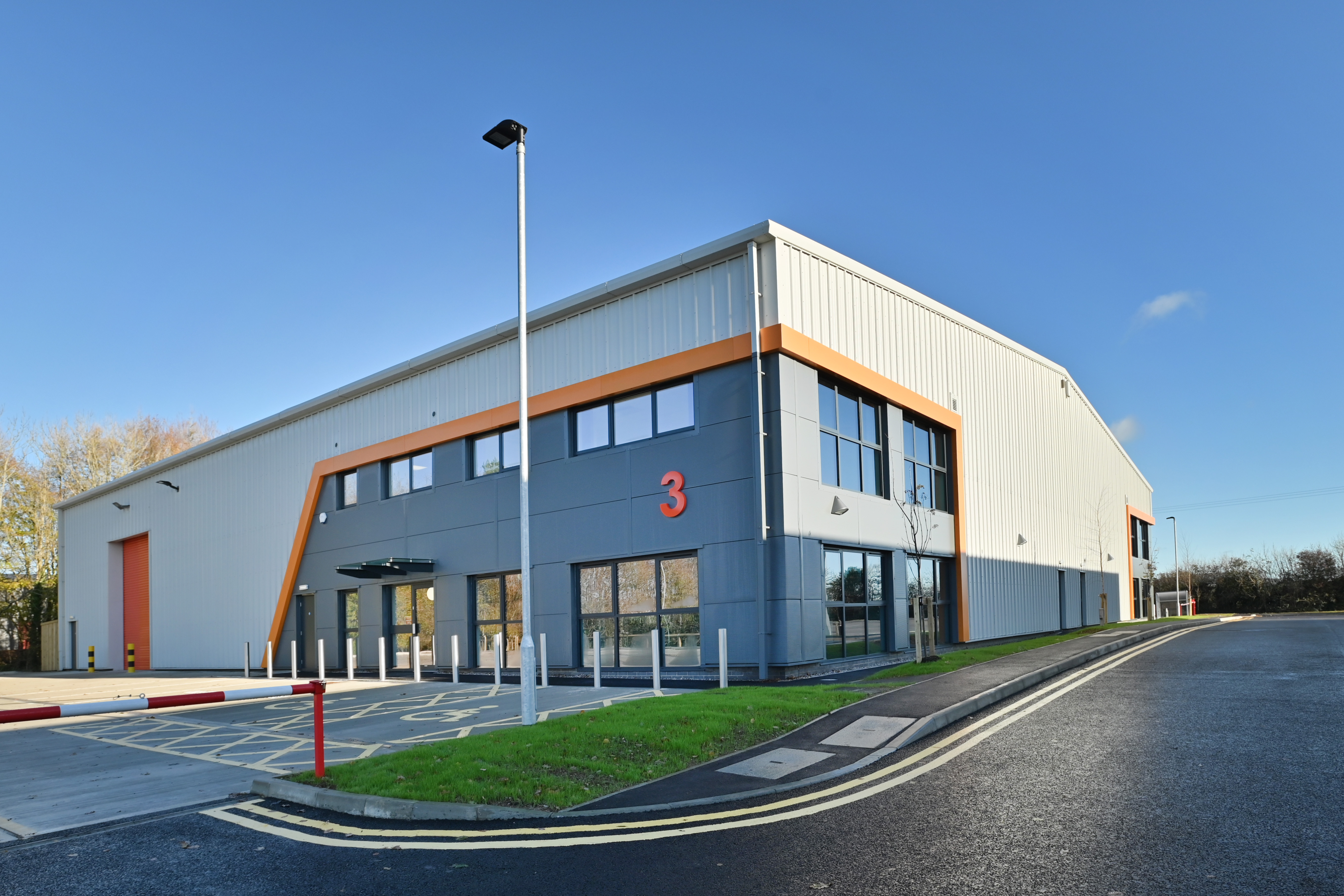
| 14 July 2026 | Beaumont Way opened for occupation | The completion update confirmed four purpose-built units at Langage were complete, with one let and the remaining space being marketed. |
Langage: the first completed purpose-built units
Langage is the largest-scale industrial location within the programme. It sits close to the A38 and is intended for advanced manufacturing, engineering, logistics, space, low-carbon and energy-related activity. The Freeport programme includes road, bridge, utility and plot-enabling work as well as commercial buildings.
The most visible current result is the £8 million Beaumont Way development. Four units were delivered over approximately 12 months and declared complete and ready for occupation on 14 July 2026. Unit 4 had been let at publication, while the remaining units were available. The project is forecast to support about 138 full-time-equivalent jobs when occupied; that is a delivery forecast, not evidence that all 138 jobs already exist.
The same project recorded construction-stage social value including eight internships, six apprenticeships, 172 paid training weeks and 17 qualifications. These are more immediate outputs than the programme's wider long-term job and investment ambitions.
Langage still has additional infrastructure and development work ahead. The 2024/25 annual report allocates seed capital to Beaumont Way, a spine road, a pedestrian and cycle bridge, core infrastructure and a plot-access road. Completion of one building scheme should not be read as completion of the whole Langage tax site.
South Yard: marine, defence and Oceansgate
South Yard is the waterfront element of the Freeport and forms part of Oceansgate, the marine enterprise zone at Devonport. Existing offices, workshops, docks and testing access support marine technology, defence, autonomous systems and advanced engineering businesses.
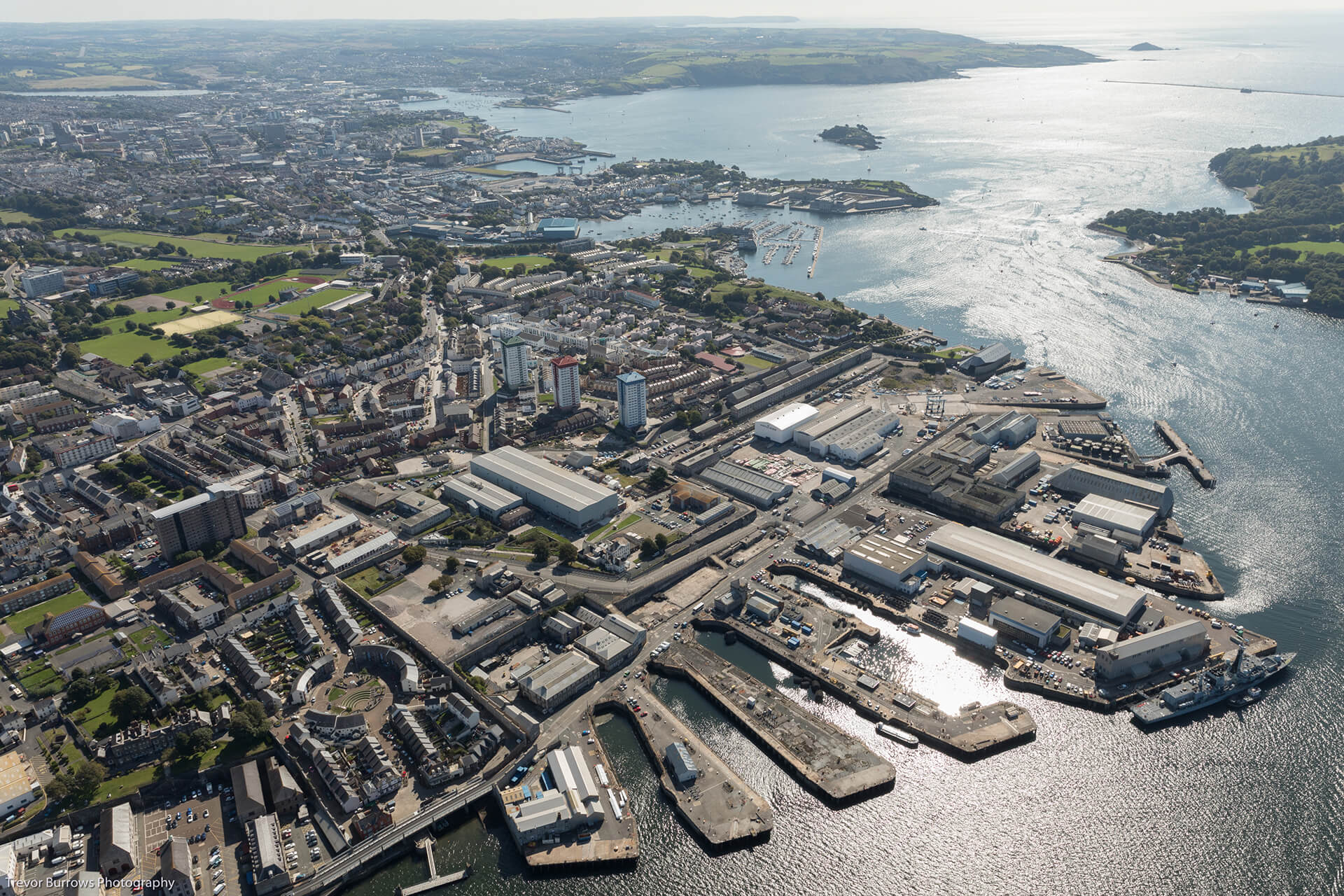
South Yard combines historic dockyard infrastructure with modern marine and defence employment space. Source: Plymouth and South Devon Freeport.
The next physical phase is a pair of buildings containing eight innovation units with workshops, prototyping space and project offices. The 2024 planning submission described more than 1,700 sq m of space. Updated council papers record £3.556 million of seed capital and £3.344 million of council service borrowing, with an estimated 49 direct jobs.
On 1 July 2026, Plymouth City Council approved entry into the Phase 3.1 construction contract. That is an important delivery commitment, but the evidence reviewed does not yet confirm that physical construction of the eight units has started. The page should move to an under-construction description only after a dated site or contractor update verifies mobilisation.
Current activity is not limited to future buildings. Teledyne Marine's May 2026 Oceansgate visit showed an international marine-technology business using a new facility at South Yard to support Royal Navy and UK supply-chain work.
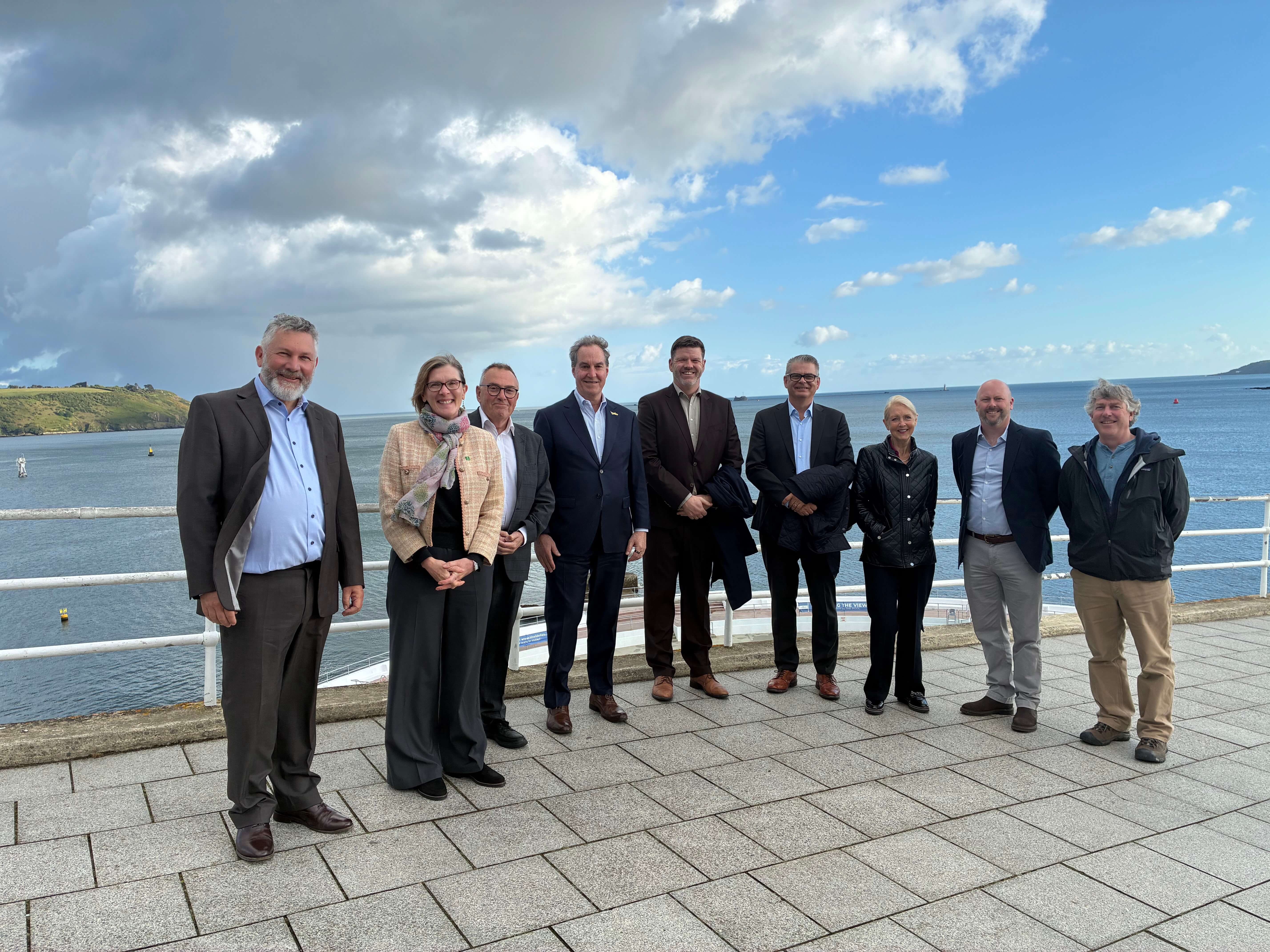
Teledyne Marine's Oceansgate presence is evidence of active occupation within the South Yard cluster. Source: Plymouth and South Devon Freeport.
Sherford: preparing employment land
Sherford is the eastern tax site, positioned beside the new community and near the A38. Its role is to provide land for logistics, engineering, manufacturing and other employment uses. Unlike Beaumont Way, the current evidence is about enabling infrastructure rather than completed occupiable buildings.
The May 2026 Sherford update confirmed the final £233,000 drawdown from a £1.2 million seed-capital allocation. Roads, sewers, sustainable-drainage ponds and earthworks were progressing towards a stated target of a fully serviced development parcel in the fourth quarter of 2026.
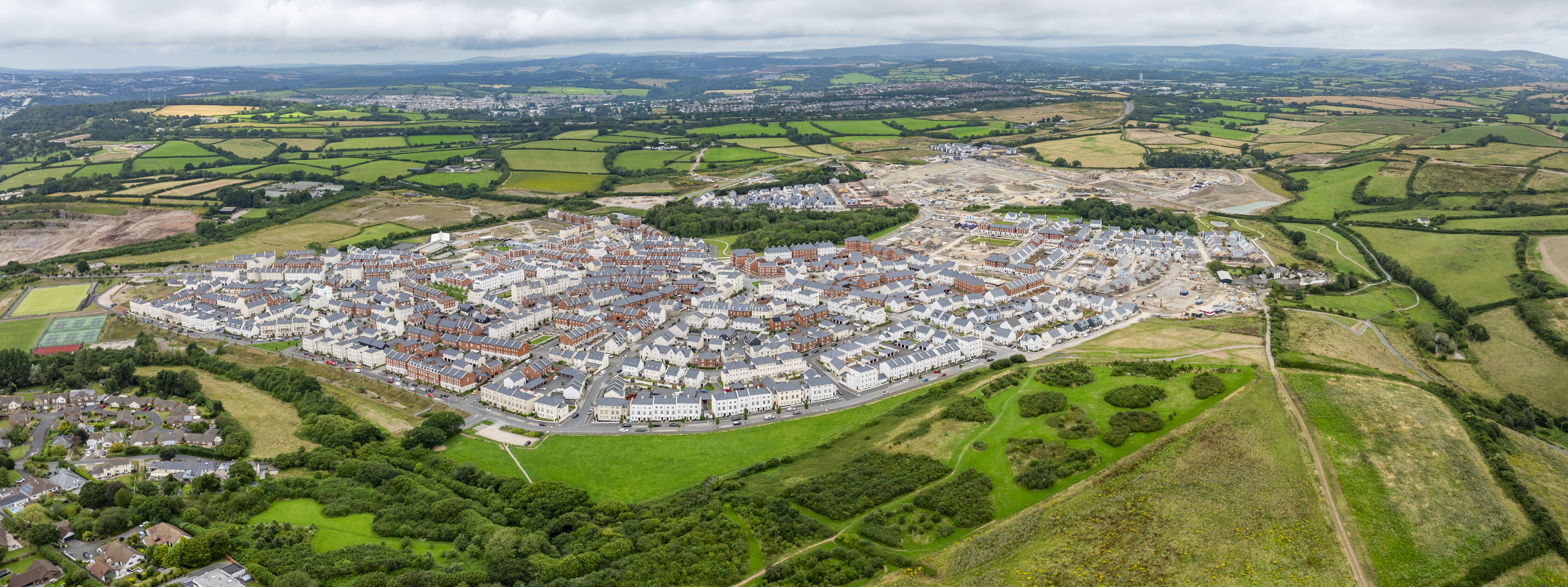
Sherford's current delivery stage is site preparation and infrastructure, not completed business premises. Source: Plymouth and South Devon Freeport.
This distinction matters when assessing progress. Drawing down an allocation confirms that funding has moved through the approved programme; it does not on its own prove completion, occupation or job creation. The next meaningful evidence will be completed infrastructure, serviced plots, planning permissions and confirmed occupiers.
How the £25 million seed programme is allocated
The latest published Freeport annual report covers 2024/25 and records the entire £25 million government seed grant as drawn down by December 2024. It identifies the following approved allocations. Values describe the programme budget, not necessarily final audited construction costs.
| Site or programme | Seed-capital allocation |
|---|---|
| Oceansgate innovation units, South Yard | £3.556 million |
| Princess Yachts extension, South Yard | £315,000 |
| ABP Millbay port infrastructure | £1.300 million |
| Cattewater Harbour infrastructure | £382,000 |
| Beaumont Way units, Langage | £4.000 million |
| Langage spine road | £4.000 million |
| Langage pedestrian and cycle bridge | £4.519 million |
| Langage core infrastructure | £925,000 |
| Langage plot-access road | £800,000 |
| Sherford land acquisition | £3.700 million |
| Sherford access and core infrastructure | £1.200 million |
| Programme allocation | £303,000 |
| Total | £25.000 million |
The public grant is only one part of the financing structure. Early business-case material anticipated local public funding, borrowing and private investment alongside seed capital. Those figures are programme expectations and should not be reported as secured or spent unless a current audited source confirms them.
Tax and customs benefits explained
The Freeport does not remove all taxes from Plymouth or South Devon. Eligible businesses operating within a designated tax site may qualify for reliefs including business rates relief, enhanced capital allowances, structures and buildings allowances and employer National Insurance contributions, subject to the detailed rules and entry dates.
The government's current business-rates guidance says eligible businesses can enter the relief window up to 30 September 2031. Business-rates relief normally runs for five years from the beneficiary's first eligible claim, so a later entrant can continue receiving it beyond 2031 within the rules.
Customs benefits are separate. They apply only within an authorised customs site and where the operator and goods meet HM Revenue and Customs requirements. Being inside the wider Freeport boundary does not automatically confer customs treatment or tax relief.
Jobs, investment and the defence economy
The full business case set a headline ambition of at least 3,500 jobs. Earlier programme material also anticipated close to £247 million of private-sector investment within a broader £311 million capital-investment forecast. These are strategic targets and forecasts, not a current count of delivered jobs or committed investment.
Project-level evidence is more reliable. Beaumont Way is forecast to support around 138 full-time-equivalent jobs when occupied, while the Oceansgate innovation units are expected to support 49 direct jobs. Existing South Yard activity and completed port projects also contribute to the cluster, but they should not be added together without a consistent programme monitoring method.
The Freeport now sits within a wider defence-growth policy. The government's Industrial Strategy Zones action plan identifies Plymouth and South Devon Freeport as a Defence Industrial Strategy Zone. A separate £50 million Defence Growth Deal was announced in April 2026 for Plymouth and the wider South West. That deal can reinforce local demand and supply chains, but it is not part of the Freeport's £25 million seed-capital total.
Property and rental context
The Freeport is an employment and infrastructure programme rather than a housing development. Its direct property effect is the creation of serviced employment land and industrial floorspace. Any effect on nearby house prices or rents would be indirect and influenced by wider supply, incomes, interest rates, transport and population change.
The Office for National Statistics Plymouth dashboard reported an average house price of £216,000 in April 2026 and an average private rent of £994 per month in May 2026. The South Hams dashboard reported an average house price of £375,000 and average private rent of £1,000 for the same respective periods.
These local-authority averages cover much larger markets than PL1, PL7 or PL9 and do not isolate the Freeport sites. Property and rental effects therefore remain qualitative, and the figures should be used as regional context only. There is not yet enough evidence to attribute a sale-price, rent or rental-rental return premium to the Freeport.
A future property assessment should look for verified occupation, sustained job creation, completed transport links and local transaction or rental evidence. Announced investment, land preparation or tax-site designation alone does not demonstrate a residential market effect.
Delivery risks and watchpoints
The programme has moved beyond business-case approval, but several risks remain:
- Occupation: completed units create economic value only when suitable businesses occupy and use them.
- Infrastructure sequencing: roads, utilities, drainage and bridge works must align with private development timetables.
- Construction cost: borrowing requirements and contract values can change as designs and market prices develop.
- Displacement: growth should be additional rather than businesses moving short distances mainly to access reliefs.
- Target measurement: job and investment ambitions require consistent evidence that distinguishes forecasts, commitments and delivered outcomes.
- Tax-window timing: businesses and landowners have a finite period in which qualifying new investment can enter the relief regime.
- Site-specific progress: a milestone at one tax site should not be used to describe the delivery stage of the other two.
What happens next
At Langage, the immediate test is occupation of the remaining Beaumont Way units and continued delivery of road, bridge and utility projects. Reported jobs should be updated only when occupiers and employment numbers are confirmed.
At South Yard, the next verifiable milestone is mobilisation and construction of the eight Oceansgate Phase 3.1 innovation units following the July 2026 contract approval. Completion, letting and occupation will matter more than the approval alone.
At Sherford, the focus is completion of roads, drainage and earthworks, followed by serviced plots, planning applications and occupier commitments. Across the programme, the publication of the 2025/26 annual report will provide the next formal opportunity to compare delivery with the business-case targets.