
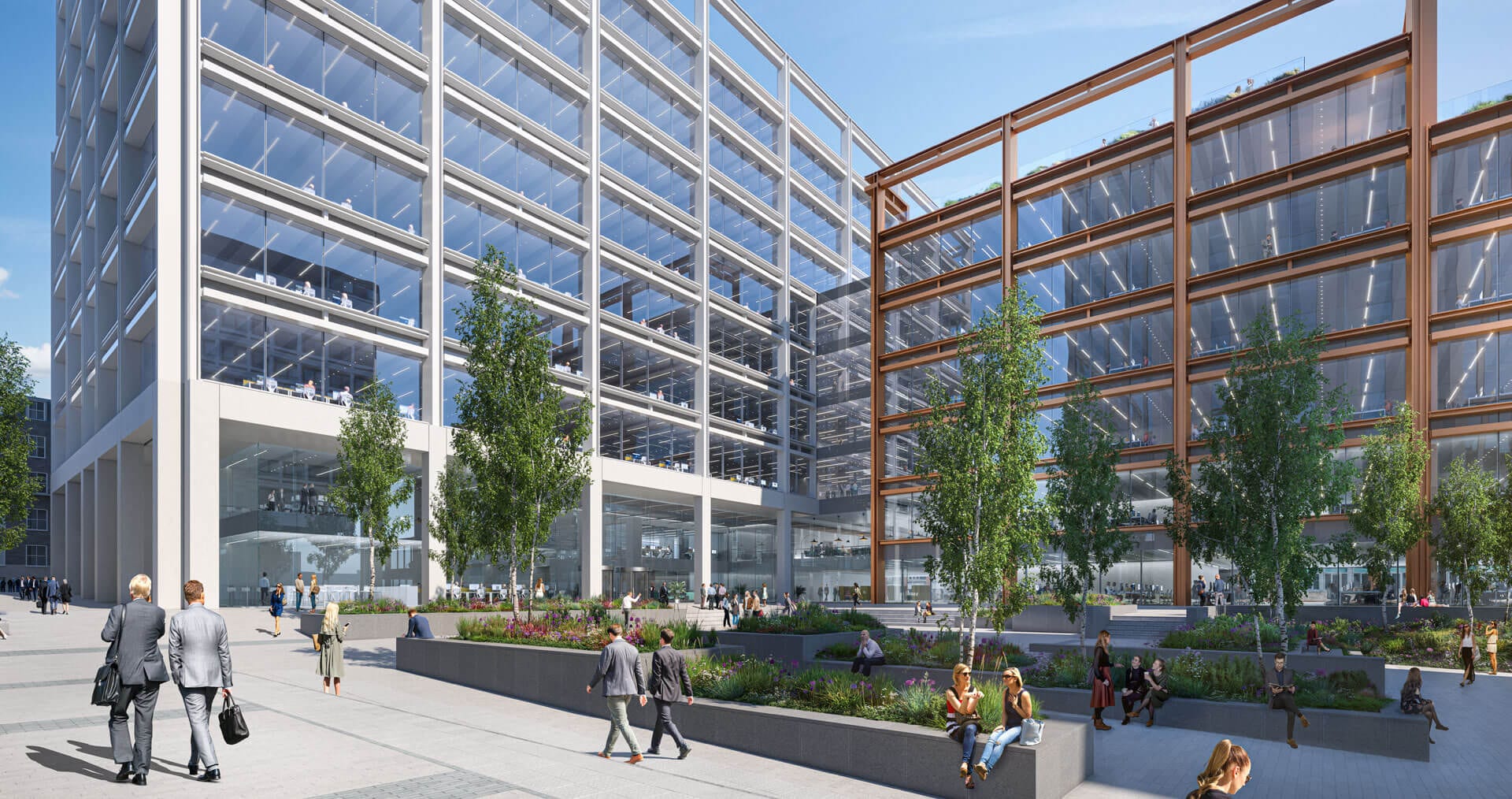
Project snapshot
| Item | Detail |
|---|---|
| Project name | Pilgrim Street Regeneration / East Pilgrim Street / Pilgrim Place |
| Location | Newcastle upon Tyne city centre, focused on Pilgrim Street and adjoining blocks around Market Street, New Bridge Street West, John Dobson Street, Worswick Street, Carliol Square and the Swan House / Tyne Bridge approach |
| Project type | Mixed-use city-centre regeneration corridor |
| Strategic role | Expansion and renewal of Newcastle’s east-side city core, combining employment, leisure, hotel, heritage restoration and public realm |
| Planning framework | East Pilgrim Street Development Frameworks, treated by the council as supplementary planning guidance / material planning considerations |
| Site scale | Public sources vary. Pilgrim Place material refers to a 7.9 ha site; Invest Newcastle also describes a 10-acre regeneration site but lists the wider opportunity as 20 acres. Treat the boundary as project-dependent rather than a single fixed acreage |
| Wider development scale | Nearly 1 million sq ft of accommodation, including more than 750,000 sq ft Grade A offices, according to Invest Newcastle |
| Gross development value | £500m, according to Invest Newcastle’s investment profile |
| Main private landowners / developers | Taras Properties Limited and Reuben Brothers (Newcastle) Limited |
| Major public-sector occupiers | HMRC at Pilgrim’s Quarter; Department for Work and Pensions at 1 Pilgrim Place |
| Major private occupiers | Bank House occupiers include DAC Beachcroft, Lycetts, Barclays, CUBO, Cundall, Knights and Neptune North |
| Key delivered assets | Bank House, Hotel Gotham Newcastle phase, STACK Newcastle at Worswick Chambers, restored heritage elements and public-realm works |
| Key under-construction / fit-out assets | Pilgrim’s Quarter HMRC fit-out; 1 and 2 Pilgrim Place |
| Hotel / leisure | Hotel Gotham in the former fire station / police station complex; STACK Newcastle in restored Worswick Chambers |
| Public realm | Southern Pilgrim Street resurfacing, new paving, improved pedestrian crossings, new two-way cycle lane, public spaces, plaza and SuDS / rain-garden elements |
| Public-realm funding | £6.2m southern Pilgrim Street works, including £4.3m from the North East LEP Local Growth Fund and £1.9m from Newcastle City Council |
| Current delivery status | Major buildings are complete, trading, occupied or in fit-out; 1 and 2 Pilgrim Place remain live construction / pipeline assets |
| Main investor relevance | City-centre employment growth, office-worker footfall, leisure activation, heritage-led placemaking and improved micro-location confidence |
| Key uncertainty | No single final completion date for the whole corridor; some floor areas, site areas and hotel-room figures vary by source and project phase |
Snapshot sources: Invest Newcastle, Pilgrim Place, Newcastle City Council, HMRC, Bank House, Ryder, STACK and Hotel Gotham coverage. beyond.investnewcastle.com
Location and strategic context
Why Pilgrim Street matters
Pilgrim Street sits on the eastern side of Newcastle’s central core. It is close to the city’s retail heart around Northumberland Street, the historic and commercial core around Grey Street and Grainger Town, the Quayside, Swan House, the Tyne Bridge approach and key east-west city-centre routes. This gives the corridor strategic importance: it can either act as a disconnected edge of the city centre or become a stronger link between prime retail, offices, nightlife, heritage assets and the Quayside.
The East Pilgrim Street area has long been treated as a major regeneration opportunity. Council consultation material described it as one of the most strategically important sites in the North of England and a location where the city’s retail, leisure and commercial core could expand. Let's Talk Newcastle
Policy and planning context
Newcastle City Council’s East Pilgrim Street Development Frameworks divide the wider area into northern, central and southern sections. The northern area is identified for retail-led development, while the central and southern areas support a wider mixed-use approach, including offices, residential and leisure. The frameworks are not a single planning permission, but they provide the coordinated planning context for plot-by-plot redevelopment. letstalknewcastle.co.uk
This framework approach is important because the regeneration area contains a mix of vacant or underused plots, modern redevelopment sites, listed buildings, heritage façades, highways infrastructure and public-realm constraints. The project has therefore progressed through multiple individual planning applications, listed-building consents, demolition phases, fit-out stages and public-realm packages rather than through one simple masterplan consent.
City-centre employment and footfall
The strongest regeneration logic is employment-led. HMRC’s move to Pilgrim’s Quarter is expected to bring together around 9,000 staff in the city centre. The government described the new regional centre as part of its Government Hub programme, with a 25-year lease and an expected move from existing sites including Benton Park View and Waterview Park from 2027. Mynewsdesk
This should be interpreted carefully. The HMRC move is not the same as 9,000 wholly new jobs for Newcastle. It is a large relocation and consolidation of civil-service employment into the city centre. The regeneration effect is still significant because it concentrates daily footfall near retailers, cafés, bars, restaurants, public transport and other city-centre businesses. Newcastle City Council has described the development as bringing thousands of jobs into the centre and supporting wider regeneration, growth and local businesses. Newcastle City Council
Public realm and active-travel context
The regeneration is being supported by public-realm works on southern Pilgrim Street between Market Street and Mosley Street. These include resurfacing, new paving, improved pedestrian crossings and a two-way cycle lane. The council says the works form part of a £6.2m programme funded by £4.3m from the North East Local Enterprise Partnership’s Local Growth Fund and £1.9m from Newcastle City Council. Newcastle City Council
These works sit within Newcastle’s wider £50m City Centre Transformation Programme, which aims to improve public spaces, walking, cycling, greening and the city-centre experience as retail patterns change and the city centre becomes more mixed-use. Newcastle City Council
What is being delivered
Regeneration components at a glance
| Component | Use | Status | Key points |
|---|---|---|---|
| Bank House | Grade A office, ground-floor commercial / amenity | Complete and fully occupied | c.120,000 sq ft / 14-storey Grade A office building; BREEAM Excellent; first major Pilgrim Place phase |
| Pilgrim’s Quarter | HMRC regional centre / Government Hub | Base build complete; fit-out under way | c.463,000 sq ft / 43,000 sq m; approximately 9,000 HMRC staff expected from 2027 |
| 1 Pilgrim Place | DWP service and support centre | Under construction | Public sources cite different area measures; DWP pre-let around 173,245 sq ft NIA, wider building around 245,000 sq ft |
| 2 Pilgrim Place | Speculative Grade A office | Under construction / marketing | Around 90,000–100,000 sq ft; open-market office opportunity |
| Hotel Gotham Newcastle | Luxury hotel, dining, bar, events | Phase opened / trading; further phase to track | Former fire station and police station / magistrates’ court complex; 90-bedroom consent reported; 57-room first phase reported as launched |
| Worswick Chambers / STACK | Leisure, street food, bars, entertainment | Open | Restored Grade II building with bars, street-food vendors, performance and terrace space |
| Public square / plaza | Public realm, routes, setting for offices/leisure | Being delivered with office phases | New public space around Pilgrim Place, with retail/leisure and basement infrastructure |
| Southern Pilgrim Street public realm | Streets, paving, crossings, cycling | Delivered / final works continuing through 2025–2026 | Resurfacing, two-way cycle lane, improved crossings and public-realm quality improvements |
| SuDS / rain-garden elements | Climate and surface-water management | Integrated into public realm / office phases | Cundall describes elevated SuDS, rain gardens and attenuation crates for Pilgrim Place |
Bank House
Bank House is the first major completed commercial building in the southern Pilgrim Place development. Project material describes it as a Grade A, BREEAM Excellent office building forming part of the wider Pilgrim Street development, which is intended to deliver more than 750,000 sq ft of new Grade A offices, a new public square, food and beverage space and a boutique five-star hotel. Bank House
Ryder describes Bank House as a completed 2023 project for Motcomb Estates Limited, with a value of around £50m and an area of 16,200 sq m. The building has also received recognition through the Lord Mayor’s Design Awards, including a special award for regeneration. ryderarchitecture.com
Occupational evidence is strong. Bank House reached 100% occupancy in October 2025 after a second letting to Neptune North. Invest Newcastle listed occupiers including DAC Beachcroft, Lycetts, Barclays, CUBO, Cundall and Knights, with Neptune North adding further technology / financial-services employment to the building. Invest Newcastle
Pilgrim’s Quarter: HMRC regional centre
Pilgrim’s Quarter is the largest single component of the regeneration corridor. It wraps around a full city block fronting Pilgrim Street, Market Street, New Bridge Street West and John Dobson Street. Newcastle City Council describes the building as six to nine storeys and around 463,000 sq ft / 43,000 sq m, accommodating approximately 9,000 HMRC staff. Newcastle City Council
The scheme reached practical completion and was officially handed over in December 2025. The base-build phase was delivered by Reuben Brothers (Newcastle) Limited with Bowmer & Kirkland as main contractor, Ryder as lead architect, Cundall as engineer and Avison Young in project management / employer’s agent roles. HMRC occupation is expected from 2027 after fit-out. Invest Newcastle
The building is also notable for heritage integration. Public statements describe the scheme as incorporating the Grade II-listed Carliol House façade into the new office block. Invest Newcastle
1 and 2 Pilgrim Place
1 and 2 Pilgrim Place form the next major office phase south of Bank House and Worswick Chambers. The DWP pre-let at 1 Pilgrim Place is a major occupational milestone. Avison Young and Invest Newcastle material describe 1 Pilgrim Place as a DWP Service and Support Centre expected to open in 2027, with 2 Pilgrim Place being developed as adjacent speculative Grade A office space. ukreiif.investnortheastengland.co.uk
The precise floor-area figures vary by source. The DWP pre-let is reported at around 173,245 sq ft net internal area, while later Invest Newcastle material describes 1 Pilgrim Place as around 245,000 sq ft with around 170,000 sq ft pre-let to DWP. 2 Pilgrim Place is generally described as around 90,000–100,000 sq ft. This difference appears likely to reflect different measurement bases or scheme descriptions, so both should be treated cautiously. ukreiif.investnortheastengland.co.uk
The scheme includes public realm, a plaza, car parking and retail/leisure uses. Cundall’s project information also highlights sustainable drainage features, including elevated SuDS above basement areas, rain gardens and attenuation crates. Cundall
Hotel Gotham Newcastle: former fire and police station
The hotel element sits within some of the area’s most important heritage buildings. Taras Properties secured consent in 2021 for a 60-bedroom hotel in the former fire station, with later permission for an additional 30 bedrooms in the adjacent former police station and magistrates’ court, bringing the consented hotel concept to around 90 bedrooms. Invest Newcastle
The operator is Hotel Gotham. The hotel’s own material describes it as being set in the former fire and police station on Pilgrim Street, a Grade II-listed complex originally designed in 1931–33. Hotel Gotham
Public reporting in late 2025 described the Fire bar opening in the newly launched Hotel Gotham Newcastle, with the former police station element expected to follow in 2026. Because sources differ between the 90-bedroom consented scheme and the launched 57-bedroom first phase, the safest current wording is that Hotel Gotham has opened / launched in phase, while the full former police station and court element should still be tracked through 2026. classbarmag.com
Worswick Chambers and STACK Newcastle
Worswick Chambers is a Grade II-listed building on Worswick Street / Pilgrim Street that has been restored and adapted into a leisure venue. Historic England’s list entry identifies Worswick Chambers as Grade II and records its late-19th-century origins. Historic England
Ryder describes the restoration as involving asbestos removal, structural stabilisation, new floors and roofs, façade restoration, damp treatment and restoration of historic windows, staircases and cornices. The modern extension adds container-style commercial space, external terraces and a courtyard for live music and entertainment. Ryder
STACK Newcastle opened on 2 December 2025 after a multi-million-pound refurbishment. STACK describes the venue as including eight bars, eight street-food vendors, entertainment space, a terrace, stage and screen across three floors. Stack Leisure
Public realm, cycling and streetscape
Public realm is a key part of the regeneration offer. Newcastle City Council’s southern Pilgrim Street works include new paving, resurfacing, improved pedestrian crossings and a new two-way cycle lane. The council has also referred to sustainable drainage measures and the removal / filling of an old subway as part of the street-improvement package. Newcastle City Council
The purpose is not only cosmetic. The public-realm improvements are intended to support the larger private developments by making Pilgrim Street more pedestrian-friendly, cycle-friendly, legible and commercially attractive. That is important because the regeneration area must work as a daily city-centre environment, not only as an office cluster.
Key partners, landowners, developers, council involvement and funding
| Party | Role | Detail / caveat |
|---|---|---|
| Taras Properties Limited | Landowner / developer within the wider Pilgrim Street area | Invest Newcastle lists Taras Properties Limited as part of the ownership structure; Taras owns the former fire station / police station hotel buildings |
| Reuben Brothers (Newcastle) Limited | Developer / landowner for major office phases | Named in HMRC / Pilgrim’s Quarter material and Invest Newcastle ownership information |
| Motcomb Estates | Asset manager / client role | Ryder identifies Motcomb Estates as client for Bank House; Pilgrim’s Quarter material refers to Motcomb Estates as asset manager for Reuben Brothers |
| Newcastle City Council | Planning authority, public-realm delivery partner, highways authority and regeneration supporter | Responsible for planning framework, streetscape improvements and city-centre transformation programme |
| North East LEP / Local Growth Fund | Public-realm funding partner | £4.3m contribution to the £6.2m southern Pilgrim Street works |
| HMRC | Anchor public-sector occupier | 25-year lease at Pilgrim’s Quarter; around 9,000 staff expected from 2027 |
| Government Property Agency | Government Hub / estate strategy partner | Works with departments to rationalise and consolidate government offices |
| Department for Work and Pensions | Major public-sector occupier | Pre-let at 1 Pilgrim Place for a service and support centre expected around 2027 |
| Bowmer & Kirkland | Main contractor | Delivered Pilgrim’s Quarter base build and involved in fit-out; also linked to other Pilgrim Street construction delivery |
| Ryder Architecture / Okana | Masterplanning and architecture | Ryder and Okana have worked on the wider Pilgrim Street / East Pilgrim Street masterplan and key buildings |
| Avison Young | Planning, project management, agency and advisory roles | Referenced in hotel consent, Pilgrim’s Quarter delivery and office leasing material |
| Cundall | Engineering / sustainability / office occupier | Engineer on major components and Bank House occupier; project information highlights SuDS and sustainability features |
| Bespoke Hotels / Hotel Gotham | Hotel operator | Operator of Hotel Gotham Newcastle in the restored fire / police station complex |
| STACK | Leisure operator | Operator of STACK Newcastle at restored Worswick Chambers |
| Knight Frank, BNP Paribas and other agents | Leasing / advisory roles | Referenced in leasing and pre-let material for Bank House and Pilgrim Place |
The clearest public funding information relates to the public realm, not the private buildings. Southern Pilgrim Street works are funded through a £6.2m package, with £4.3m from the North East LEP Local Growth Fund and £1.9m from Newcastle City Council. The wider City Centre Transformation Programme is described by the council as a £50m programme, with public grant and private investment expected to contribute over time. newcastle.gov.uk
No public source reviewed confirms a direct public capital grant into the private office buildings themselves. The principal public-sector support is through planning, public realm, highways, city-centre investment and major government occupier commitments.
Planning status and current delivery status
Planning status
Pilgrim Street Regeneration has proceeded through a framework-led, plot-by-plot planning process. The East Pilgrim Street Development Frameworks provide the area guidance, while individual schemes such as Bank House, Pilgrim’s Quarter, the hotel, Worswick Chambers / STACK and 1 and 2 Pilgrim Place have progressed through their own planning, listed-building, demolition, construction and fit-out stages. letstalknewcastle.co.uk
The HMRC Pilgrim’s Quarter planning application was submitted in late 2021 for a 463,000 sq ft Grade A office scheme, following the HMRC lease announcement. investnewcastle.com The building has since moved from planning into delivery: practical completion of the base build was announced in December 2025, with internal fit-out and occupation still to follow. Invest Newcastle
The hotel has planning and listed-building consent history across the former fire station, police station and magistrates’ court buildings, including the original 60-bedroom fire station hotel consent and later permission for an additional 30 rooms. Invest Newcastle
Current delivery status
| Component | Status |
|---|---|
| Bank House | Complete, occupied and reported fully let / fully occupied |
| Pilgrim’s Quarter / HMRC | Base build complete; internal fit-out under way; HMRC occupation expected from 2027 |
| 1 Pilgrim Place | Under construction; DWP pre-let; expected around 2027 |
| 2 Pilgrim Place | Under construction / marketing as speculative Grade A space; expected around 2027 |
| Hotel Gotham Newcastle | Open / launched in phase; full police station / court-room element should be tracked through 2026 |
| Worswick Chambers / STACK | Restored and open as STACK Newcastle |
| Southern Pilgrim Street public realm | Major works delivered / nearing completion; localised highway restrictions continue where linked to fit-out and development logistics |
| Wider East Pilgrim Street | Long-term framework area; remaining opportunities and final build-out still depend on plot-by-plot viability and demand |
The current status is therefore: substantial delivery achieved, but not fully complete. The major buildings that will determine the next phase of impact are Pilgrim’s Quarter fit-out and occupation, DWP occupation at 1 Pilgrim Place, leasing of 2 Pilgrim Place, and the full hotel / leisure trading pattern.
Full timeline: earliest planning / announcement through today
| Date / period | Milestone | Why it matters |
|---|---|---|
| 2010s policy period | East Pilgrim Street identified as a key strategic city-centre development location in Newcastle’s planning framework | Established the regeneration rationale for a coordinated approach |
| 2016 | Newcastle City Council consulted on East Pilgrim Street Development Frameworks for the northern, central and southern areas | Set the planning framework for retail, office, residential, leisure and mixed-use redevelopment |
| 2016 onward | East Pilgrim Street Development Frameworks listed by the council as supplementary planning guidance / material considerations | Provided the basis for plot-by-plot planning decisions |
| 2021 | Newcastle City Council announced / advanced its £50m City Centre Transformation Programme | Put Pilgrim Street public realm into a wider city-centre investment and active-travel context |
| 2021 | Planning and listed-building consent secured for a 60-bedroom hotel in the former fire station | Began the hotel-led heritage reuse strategy |
| November 2021 | HMRC announced Pilgrim’s Quarter as its new North East regional centre, with around 9,000 staff and a 25-year lease | Major anchor occupier commitment and turning point for the corridor |
| December 2021 | Design team submitted the planning application for the 463,000 sq ft Pilgrim’s Quarter office scheme | Moved HMRC from lease announcement into the statutory planning / delivery process |
| 2022 | Demolition and site clearance for the HMRC block progressed, including former commercial buildings within the block | Enabled construction of the new full-block office building |
| 2023 | Bank House completed and began occupation, with DAC Beachcroft becoming the first business to relocate into the building | First major new office asset delivered in the Pilgrim Place phase |
| June 2023 | Southern Pilgrim Street public-realm works began, including resurfacing, paving, crossings and a two-way cycle lane | Started visible street-level improvements to support the private development programme |
| 2024 | Permission secured for an additional 30 bedrooms in the former police station / magistrates’ court, expanding the Hotel Gotham scheme to around 90 rooms | Enlarged the hotel and heritage-reuse proposition |
| 2024 | Worswick Chambers restoration progressed / completed, preparing the building for leisure occupation | Preserved a long-neglected Grade II-listed building and added night-time economy potential |
| October 2024 | Pilgrim’s Quarter topped out | Major construction milestone for the HMRC regional centre |
| January 2025 | DWP pre-let announced at 1 Pilgrim Place; 2 Pilgrim Place confirmed as adjacent speculative Grade A office space | Confirmed the next office phase and second major public-sector occupier |
| 2025 | Work advanced on 1 and 2 Pilgrim Place, with tower cranes on site | Moved the next commercial phase into active delivery |
| October 2025 | Bank House reached 100% occupancy after a second letting to Neptune North | Demonstrated market take-up for new Grade A office space on Pilgrim Street |
| December 2025 | STACK Newcastle opened at restored Worswick Chambers | Brought a major leisure and food-and-beverage use into the corridor |
| December 2025 | Pilgrim’s Quarter base build reached practical completion and was handed over | Shifted the HMRC building from construction into fit-out and occupation preparation |
| Late 2025 | Hotel Gotham Newcastle / Fire bar reported as newly launched, with the police station phase to follow | Began hotel and hospitality activation of the former civic buildings |
| 2026 | Public-realm, road and fit-out logistics continued around Pilgrim Street and John Dobson Street | Construction impacts remain a short-term watch point |
| 2026 | 1 and 2 Pilgrim Place remain under construction / marketing | Key next phase for the office and employment story |
| 2027 target | HMRC occupation expected; DWP occupation at 1 Pilgrim Place expected; 1 and 2 Pilgrim Place expected to complete around 2027 | Main test of whether the regeneration translates into sustained daily footfall and wider city-centre demand |
Timeline sources include Newcastle City Council, Invest Newcastle, HMRC / GPA announcements, Ryder, Bank House, STACK and Hotel Gotham coverage. letstalknewcastle.co.uk
Property investor view
Investment relevance
Pilgrim Street is an employment and amenity regeneration corridor, not a residential megascheme. Its investment relevance lies in how it changes the city-centre micro-location: more workers, stronger weekday footfall, better public realm, restored heritage assets, more hotel and leisure uses, and a stronger connection between the retail core and the east side of the city centre.
The most relevant property markets are:
- city-centre apartments around Grainger Town, Grey Street, Market Street, Quayside, Manors, Gallowgate and Central Station;
- high-quality rental stock within walking distance of Pilgrim Street;
- commercial units that benefit from office-worker and hotel/leisure footfall;
- serviced-apartment or corporate-let assets where lease, planning and management rules allow;
- older secondary stock that may benefit from wider public-realm uplift but also requires careful building-level due diligence.
Investors should avoid assuming that Pilgrim Street automatically raises values. The stronger argument is that it may improve the depth and diversity of city-centre demand, especially for well-located, well-managed, energy-efficient stock.
Rental demand
Newcastle already has a deep rental base from students, graduates, professional workers, hospital and university employees, public-sector staff, tech and financial-services employees, and city-centre lifestyle renters. Pilgrim Street adds to this by concentrating civil-service, professional-services, fintech, legal, hospitality and leisure employment in the city centre.
ONS data for Newcastle upon Tyne shows average private rent at £1,204 per month in May 2026, up 10.3% year-on-year. It also reports average rents of £806 for one-bedroom properties, £997 for two-bedroom properties, £984 for flats and maisonettes, and £1,825 for four-or-more-bedroom properties. These are local-authority-level figures and should be treated as market context rather than a valuation for individual apartments near Pilgrim Street. Office for National Statistics
The rental-demand effect is likely to be strongest for:
- one- and two-bedroom city-centre apartments;
- high-specification flats attractive to professional sharers or couples;
- buildings with strong management, good EPC ratings and secure cycle storage;
- walkable units with access to Pilgrim Street, Grey Street, Central Station, Quayside and Northumberland Street;
- units suitable for corporate relocations, subject to lease and planning rules.
City-centre employment growth and tenant demand
The key employment story is not only the number of desks, but the type and concentration of occupiers. HMRC will bring a large civil-service workforce into the city centre. DWP provides another major public-sector anchor at 1 Pilgrim Place. Bank House has secured a mixed private-sector tenant base, including law, insurance, financial services, flexible workspace, engineering and fintech. mynewsdesk.com
This can support tenant demand because city-centre workers often value short commutes, walkability, gyms, food and beverage, public transport, and evening amenities. However, investors should be careful with language: HMRC and DWP are largely public-sector estate consolidation and relocation stories, not necessarily entirely new employment creation for the region.
Capital growth potential
Pilgrim Street could support capital values indirectly by improving the city-centre environment, drawing more workers into the core, activating heritage buildings and improving the east-side perception of the centre. Bank House reaching full occupancy and Pilgrim’s Quarter reaching practical completion are both positive signals for the corridor’s credibility. investnewcastle.com
That said, capital growth is not guaranteed. ONS reported Newcastle upon Tyne’s average house price at £209,000 in April 2026, up 5.0% year-on-year, with flats and maisonettes averaging £129,000. ONS also cautions that local data can be based on smaller samples, can be volatile, and is provisional in the latest periods. Office for National Statistics
A cautious investor approach would be:
- pay based on today’s comparable evidence, not assumed 2027 uplift;
- assess building-level service charges, lease length, ground rent, cladding / EWS1 and maintenance obligations;
- compare achieved rents rather than only asking rents;
- stress-test mortgage rates, voids and letting fees;
- avoid overexposure to buildings that rely on short-let assumptions unless fully compliant.
Micro-location strengths
Pilgrim Street’s strengths include:
- proximity to Newcastle’s retail and hospitality core;
- improving public realm and active-travel infrastructure;
- walking access to Grey Street, Monument, Northumberland Street, Quayside and Central Station;
- major public-sector office anchors;
- restored heritage buildings adding character and leisure activity;
- strong office take-up at Bank House;
- potential uplift to underused streets that previously felt secondary to the prime core.
Micro-location weaknesses and risks
The area still has watch points:
- ongoing construction and fit-out disruption through 2026–2027;
- traffic complexity around Swan House, John Dobson Street and the Tyne Bridge approach;
- some streets may feel office-led and quieter outside working hours until leisure, hotel and ground-floor uses mature;
- STACK and hotel uses may create noise, licensing and crowd-management considerations for nearby residential assets;
- nearby apartment values and rents will vary sharply by building quality, aspect, leasehold structure and management;
- Newcastle has other attractive residential micro-locations, including Quayside, Ouseburn, Jesmond, Central Station fringe and Newcastle Helix / city-centre west.
What investors should track
- HMRC move-in timetable — whether occupation begins as expected from 2027 and how quickly the building reaches operational capacity.
- DWP occupation at 1 Pilgrim Place — timing, staffing levels and operational pattern.
- 2 Pilgrim Place leasing — the key test of wider Grade A office demand beyond public-sector anchors.
- Bank House tenant retention — renewals, expansion, rents and any incentives.
- Hotel Gotham full phasing — whether the police station / magistrates’ court phase completes and trades as planned.
- STACK Newcastle trading and licensing — footfall benefits versus noise and evening-economy management.
- Public-realm completion and maintenance — paving, crossings, cycle lane, planting, SuDS and wayfinding.
- Actual achieved residential rents — especially one- and two-bedroom units within a 5–15 minute walk.
- Service-charge inflation — particularly in modern apartment blocks with lifts, concierge, shared heating, gyms or complex façades.
- Office-market conditions — hybrid working, public-sector estate strategy, Grade A supply and investor appetite for regional offices.
Risks and watch points
| Risk / watch point | Why it matters | Current assessment |
|---|---|---|
| Delivery timing | HMRC, DWP and 1 / 2 Pilgrim Place are central to the next phase | Medium: strong progress, but fit-out and occupation still need to complete |
| Occupier concentration | HMRC and DWP are major anchors | Medium: stabilising for footfall, but reliance on public-sector estate decisions is a risk |
| 2 Pilgrim Place leasing | Speculative office space must prove private-sector demand | Medium/high until leases are secured |
| Office-market cyclicality | Hybrid working and macro conditions affect Grade A take-up and rental returns | Medium |
| Construction disruption | Road closures, fit-out logistics and public-realm works can affect access and trading | Medium in the short term |
| Heritage complexity | Restored listed buildings require careful maintenance and viable uses | Medium |
| Night-time economy impact | STACK and hotel / bar uses add vibrancy but can create noise and management issues | Medium |
| Public-realm maintenance | New paving, cycle lanes, rain gardens and SuDS need long-term upkeep | Medium |
| Overpricing regeneration uplift | Investors may pay for future benefits before they are proven | Medium/high |
| Residential comparability | Citywide ONS data does not price individual buildings | Medium/high |
| Traffic and permeability | Swan House / Tyne Bridge approach can still feel road-dominated | Medium |
| Source inconsistency | Site size, floor areas and hotel room numbers vary by source and phase | Medium; use conservative wording |
| Retail / F&B viability | More footfall does not guarantee all ground-floor units trade well | Medium |
| Public-sector relocation risk | Government timetables can slip or change with policy and budget cycles | Low/medium, given signed leases and advanced delivery, but not zero |
Rental impact note
Rental impact is qualitative at this stage. Treat the rent and sales discussion as evidence-led context, not a promise of future price or rent movement.