
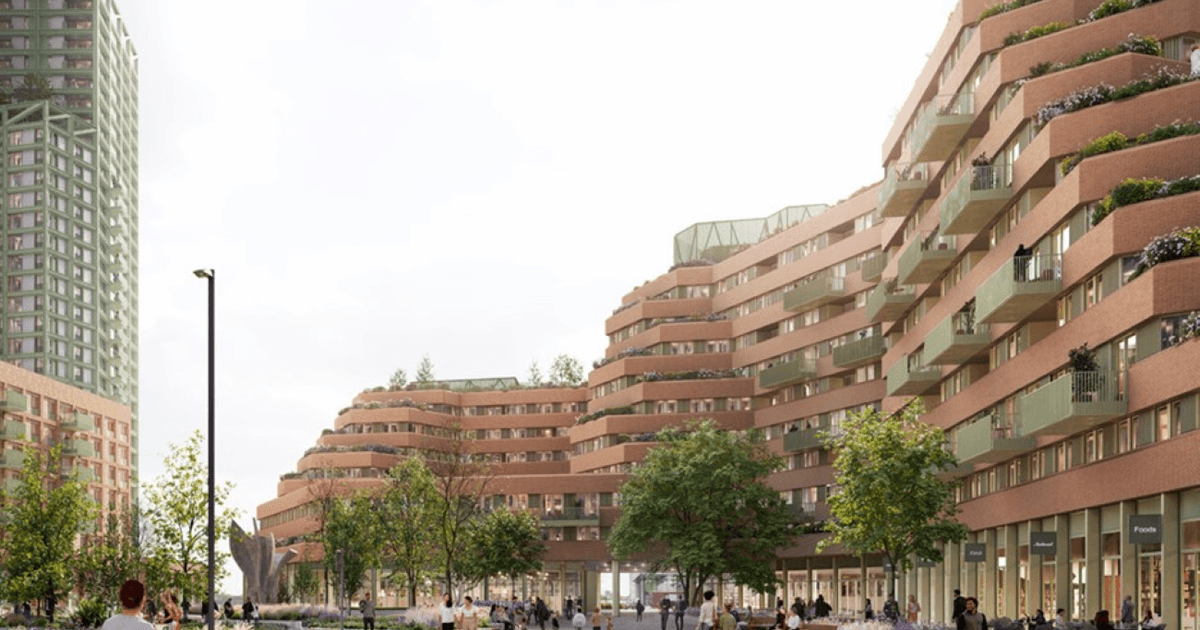
Project snapshot
| Item | Evidence-led position |
|---|---|
| Project | Moorfoot Catalyst Site |
| City | Sheffield |
| Location | South of The Moor, inside the ring road near St Mary's Gate |
| Public bodies | Sheffield City Council and Homes England |
| Approximate scale | Around 12 acres / more than five hectares in 2026 market-engagement coverage |
| First phase | Former Wickes site and Moorfoot Building |
| First-phase homes | Around 725 homes reported in 2026 launch coverage |
| Wider homes potential | Sheffield prospectus indicates about 1,700 homes across the wider Moorfoot area |
| Proposed uses | Residential, commercial, retail, food and beverage, mobility hub, public realm |
| Planning status | Concept masterplan / emerging Local Plan allocation and market engagement; development partner still to be appointed |
| Investor reading | Strong strategic location, but delivery is conditional on procurement, planning, funding and market demand |
Location and strategic context
Moorfoot sits at the southern end of Sheffield city centre, below The Moor and close to St Mary's Gate, London Road and Ecclesall Road. It is a gateway location, but today it can feel like a hard edge rather than a natural continuation of the retail core. The regeneration purpose is to make this part of the city centre feel connected, populated and useful across the day and evening.
Sheffield's wider city-centre strategy is to grow residential population, diversify the retail core, improve connectivity and create new neighbourhoods around catalyst sites. Moorfoot is one of those catalyst sites, alongside Furnace Hill/Neepsend and Sheffield Station Campus. The New Neighbourhoods Prospectus describes Moorfoot as a key place for bridging the divide between the south and the city centre.
What is proposed or delivered
The currently marketed opportunity is residential-led. The first phase is focused on the former Wickes site and the Moorfoot Building, with around 725 homes and supporting commercial, retail, food and drink, mobility hub and public-realm uses reported in 2026 launch coverage.
The wider prospectus positions Moorfoot as capable of around 1,700 homes. It also highlights the potential to repurpose the Moorfoot Building, a distinctive double-hexagon / ziggurat-form landmark owned by Sheffield City Council. The prospectus says reuse of the building rather than demolition is estimated to save about 14,400 tonnes of CO2, making retrofit a core part of the place and climate story.
Nothing in the current evidence suggests the full neighbourhood is under construction. The project is in market engagement, business-case, land assembly and partner-selection territory. That is meaningful progress, but the final mix, massing, tenure, design and phasing will depend on future procurement and planning.
Partners, public bodies and funding
Sheffield City Council and Homes England are the key public partners. A December 2025 Sheffield committee report says the council is working with Homes England to create three new city-centre neighbourhoods and that the catalyst sites could accommodate about 4,000 homes in total.
The same report states that Homes England's Board gave in-principle approval in April 2024 to support the use of the agency's statutory powers in Sheffield. It also notes that similar land-assembly/CPO processes could follow for Moorfoot and Station Gateway if required, after work on Furnace Hill and Neepsend.
Press coverage and tender notices in 2026 describe a £300m residential-led regeneration opportunity and Homes England's search for a development partner. Investors should treat this as a public-private delivery opportunity, not a council-funded construction scheme that is already guaranteed to proceed.
Planning and governance status
The Moorfoot area is identified as a priority location in the City Centre Strategic Vision and emerging Local Plan. The New Neighbourhoods Prospectus says a concept masterplan has been prepared and that the area is allocated for housing, including related or compatible uses, and mixed use in the emerging Local Plan.
Preliminary market engagement launched in 2026. The procurement and development-partner process will be the next key gateway. After that, planning applications, detailed design, phasing, infrastructure and public-realm delivery will need to be resolved.
Timeline
| Date / period | Milestone |
|---|---|
| 1981 | Moorfoot Building opens as a major government office building |
| 2023 | Sheffield publishes priority neighbourhood frameworks identifying Moorfoot as a catalyst site |
| April 2024 | Homes England Board gives in-principle support for use of statutory powers in Sheffield catalyst-site work |
| 2025 | Sheffield New Neighbourhoods Prospectus sets out Moorfoot as a major city-centre housing opportunity |
| December 2025 | Sheffield committee report updates progress on city-centre catalyst sites |
| May 2026 | Sheffield City Council and Homes England launch preliminary market engagement for Moorfoot at UKREiiF |
| 2026 onward | Development partner selection, business case, planning and phasing to determine actual delivery |
Property investor section
Moorfoot is a useful early indicator for Sheffield city-centre residential growth because it combines public-sector land, Homes England involvement, a recognisable city landmark and a strategic gateway location. If delivered well, it could help extend the city-centre living market south of The Moor and improve connections toward London Road and Ecclesall Road.
The investor caution is timing. The project is not yet a finished neighbourhood, and even the first phase depends on partner selection, planning, funding, design, infrastructure and market conditions. Investors should not treat the 725-home or 1,700-home figures as a guaranteed near-term supply schedule.
Rental impact is qualitative and should not be read as a price or rent forecast. A sensible investor view is to monitor delivery milestones: development partner appointment, planning submission, tenure mix, affordable-housing commitments, mobility hub design, public-realm funding and whether the Moorfoot Building retrofit becomes viable.
Risks and watch points
- Procurement risk: the right development partner and delivery structure still need to be secured.
- Planning risk: concept masterplan status is not the same as detailed consent.
- Retrofit complexity: converting the Moorfoot Building could be technically and financially challenging.
- Market absorption: hundreds of city-centre homes need occupier demand across tenure types.
- Public realm: the scheme's value depends on improving routes through a currently difficult gateway area.
- Land assembly: council and Homes England documents refer to statutory powers and potential CPO processes across catalyst sites.
- Affordability: the prospectus identifies a minimum 10% affordable-housing position, but final tenure needs confirmation through planning and delivery agreements.