
Project snapshot
| Item | Evidence-led position |
|---|---|
| Project | Cathedral Quarter Transformation |
| City | Wakefield |
| Area | Wakefield city centre / The Ridings / Cathedral Quarter |
| Public sponsor | Wakefield Council |
| Strategic regeneration partner | Muse |
| Centre manager during wind-down | Savills |
| Core asset | The Ridings shopping centre, now council owned |
| Funding noted | £17.9m government funding to acquire the shopping centre and start phase one, according to council announcement |
| Long-term scale | Over 1,000 new homes plus civic, leisure, green space and commercial uses in council papers |
| Delivery horizon | 10-15 year / 15-year transformation described across project material |
| Current status | First project proposal approved, acquisition completed, centre management and relocation/demolition planning underway |
| Investor reading | Major city-centre repositioning, but staged and subject to future approvals and funding |
Location and strategic context
Cathedral Quarter sits around The Ridings shopping centre, close to Wakefield Cathedral and the historic city core. The Ridings opened in the 1980s and was once a major retail destination, but Wakefield Council's project page says changing shopping patterns, online retail and the COVID-19 period left the centre unable to recover even with new investment.
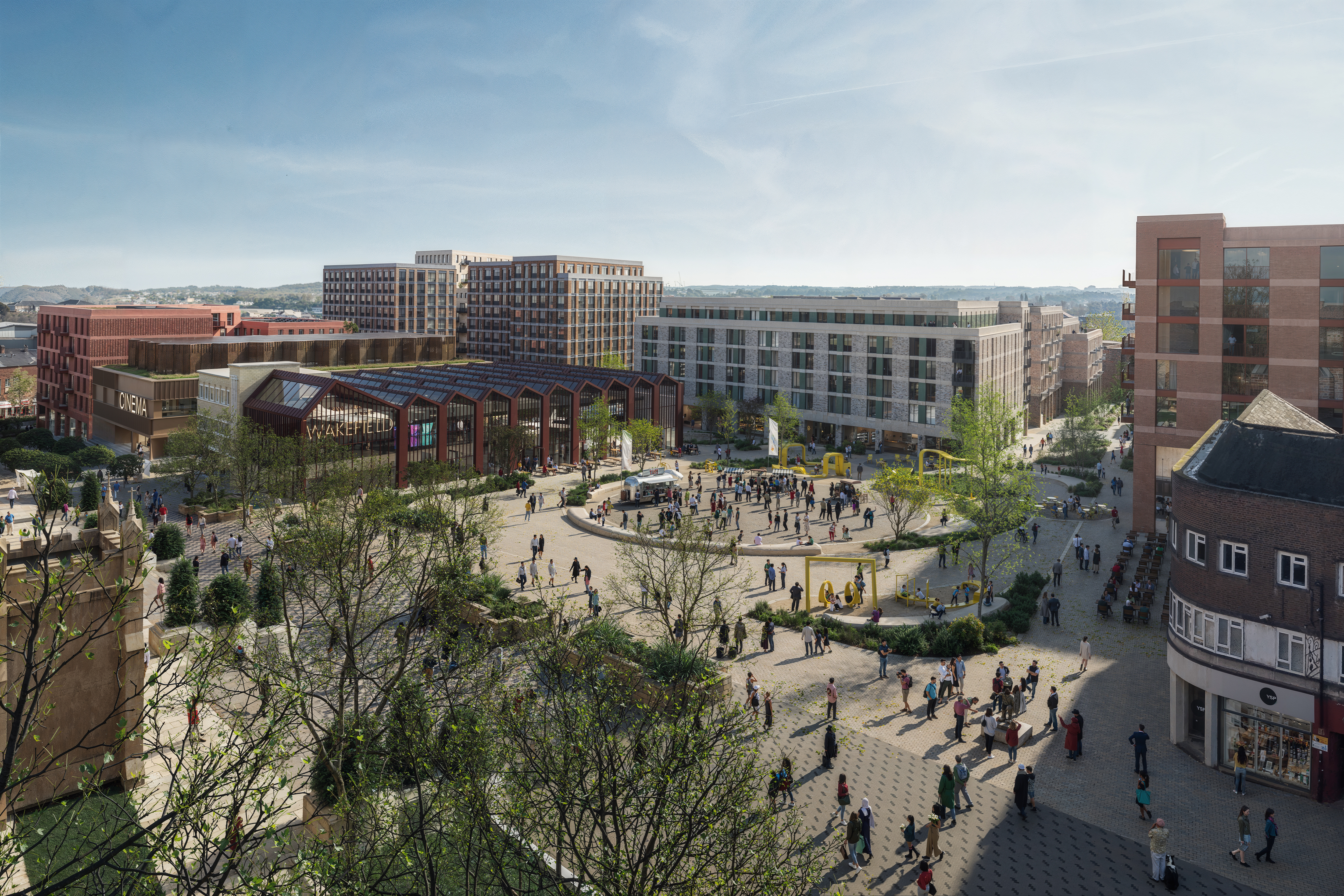
The regeneration strategy is to replace outdated inward-facing retail infrastructure with a more open, mixed-use city-centre quarter. That means homes, public space, civic and cultural uses, hospitality, leisure and smaller modern retail rather than relying on a traditional enclosed shopping-centre model.
What is proposed
Wakefield Council says the plan is to close The Ridings once remaining shops have vacated, demolish the centre, acquire some nearby buildings and create one larger redevelopment site. The footprint now includes the area around the end of Bread Street opposite the Cathedral, allowing the planned Cathedral Square to become part of the larger quarter.
Council reports and call-in material describe a long-term programme with over 1,000 new homes, a new library and museum, a new public square, additional green spaces, a revitalised commercial, hospitality and leisure offer, and new car parking provision. Muse has also described the scheme as introducing around 850 new homes with ground-floor commercial uses, reflecting that numbers may vary as the masterplan and phases are refined.
The key point is that Cathedral Quarter is not a single building project. It is a phased city-centre restructuring programme, starting with control of The Ridings and early enabling work, then moving through demolition, public realm, residential phases and civic/cultural delivery.
Partners, funding and governance
Wakefield Council is the public-sector lead. Muse is the strategic regeneration partner, with council papers stating that the development agreement was signed on 15 December 2025 after Heads of Terms were approved in July 2025.
Council papers say works to support the Cathedral Quarter project proposal were co-funded by Homes England, West Yorkshire Combined Authority, Wakefield Council and Muse. Wakefield Council's green-light announcement says £17.9m from government has been secured to acquire the shopping centre and kick-start the first phase.
Savills has been appointed to manage The Ridings on the council's behalf until the remaining shops have closed and the building is empty. The council says it will work directly with businesses and wants thriving businesses to stay in Wakefield.
Planning and delivery status
The project is approved at programme/proposal level, but individual later phases will still need future approvals. The March 2026 call-in outcome material says there is in-principle support for the longer 15-year transformation, with future phases subject to Cabinet approval at the appropriate stage.
That means the practical delivery watchpoints are clear: business relocation, centre closure, demolition programme, acquisition of surrounding buildings, updated design detail, planning applications, funding packages, residential tenure mix, civic-use delivery and construction phasing.
Timeline
| Date / period | Milestone |
|---|---|
| 2023 | Wakefield city masterplan adopted after consultation, identifying The Ridings and Kirkgate area as needing major regeneration |
| July 2025 | Heads of Terms for strategic regeneration partnership approved by Cabinet, according to council papers |
| December 2025 | Development agreement with Muse signed, according to council papers |
| February 2026 | Cabinet approved the first Cathedral Quarter project proposal |
| March 2026 | Cabinet reconsidered and confirmed the decision after call-in scrutiny |
| 2026 | Council ownership, Savills centre management, business support and demolition planning phase |
| 10-15 years | Long-term Cathedral Quarter transformation delivered in phases, subject to approvals and funding |
Property investor section
Cathedral Quarter is one of the clearest regeneration signals in Wakefield because it deals with a central, visible site and aims to replace a declining retail model with a broader mix of uses. If delivered well, more homes, civic activity, public spaces and hospitality could help Wakefield city centre feel more active beyond traditional shopping hours.
The positive case for investors is the scale and public control. Council ownership of The Ridings reduces site-fragmentation risk, Muse brings large regeneration experience, and public-sector partners are involved in early project development. A major residential pipeline in the centre could also deepen the city-centre living market over time.
The cautious case is phasing. The programme is measured in years, not months. Existing businesses need relocation support, demolition is a major step, future phases need Cabinet approvals, funding must be assembled and construction-market conditions can affect sequencing. Investors should not price nearby property as if the whole quarter already exists.
Rental impact is qualitative and should not be read as a price or rent forecast. A disciplined view is to track actual milestones: centre closure, demolition start, planning approvals, first residential starts, public-square delivery, museum/library decisions and evidence from completed homes.
Risks and watch points
- Business transition: remaining occupiers need credible relocation support and clear communication.
- Demolition complexity: The Ridings and adjacent buildings create a large city-centre demolition task.
- Funding: later phases depend on future funding and approvals.
- Delivery horizon: a 10-15 year programme will pass through several market cycles.
- Civic-use certainty: library, museum and cultural components need defined scope, budgets and operating plans.
- Residential demand: the city-centre homes pipeline needs real absorption evidence as phases complete.
- Public realm: the scheme's value depends on streets, squares and green spaces being well designed and maintained.