
Project snapshot
| Item | Evidence-led position |
|---|---|
| Project | Bradford City Village |
| City | Bradford |
| Regeneration area | Top of Town and Darley Street, north of Centenary Square and west of Bradford Forster Square station |
| Initial sites | Kirkgate, Oastler and Chain Street |
| Public sponsor | Bradford Council |
| Development partner | ECF, the partnership between Muse, Homes England and Legal & General |
| Homes | Up to 1,000 modern energy-efficient homes |
| Tenure | Mix of affordable and private rented homes, with later phases subject to funding/investor decisions |
| Public realm | Three new green spaces / community parks referenced in consultation material |
| Market context | New Darley Street Market enables Oastler/Kirkgate transition |
| Planning status | Planning approval reported in 2026 |
| Investor reading | Strong city-centre reset signal, but benefits depend on phasing, demolition, funding and occupation |
Location and strategic context
City Village sits in Bradford's former commercial heart: the Top of Town, Kirkgate, Oastler, Chain Street and Darley Street area. It is close to Forster Square station, the Broadway, Centenary Square, City Park and the new Darley Street Market. This is a central location, but one that has suffered from changing shopping patterns, declining footfall and underused retail assets.
The strategic move is to put residents back into the city centre. Bradford City Village is not just a housing scheme; it is a retail-core repurposing project. Its success depends on whether homes, markets, independent businesses, public spaces and cultural activity can create a more resilient city-centre economy than retail alone.
What is proposed or delivered
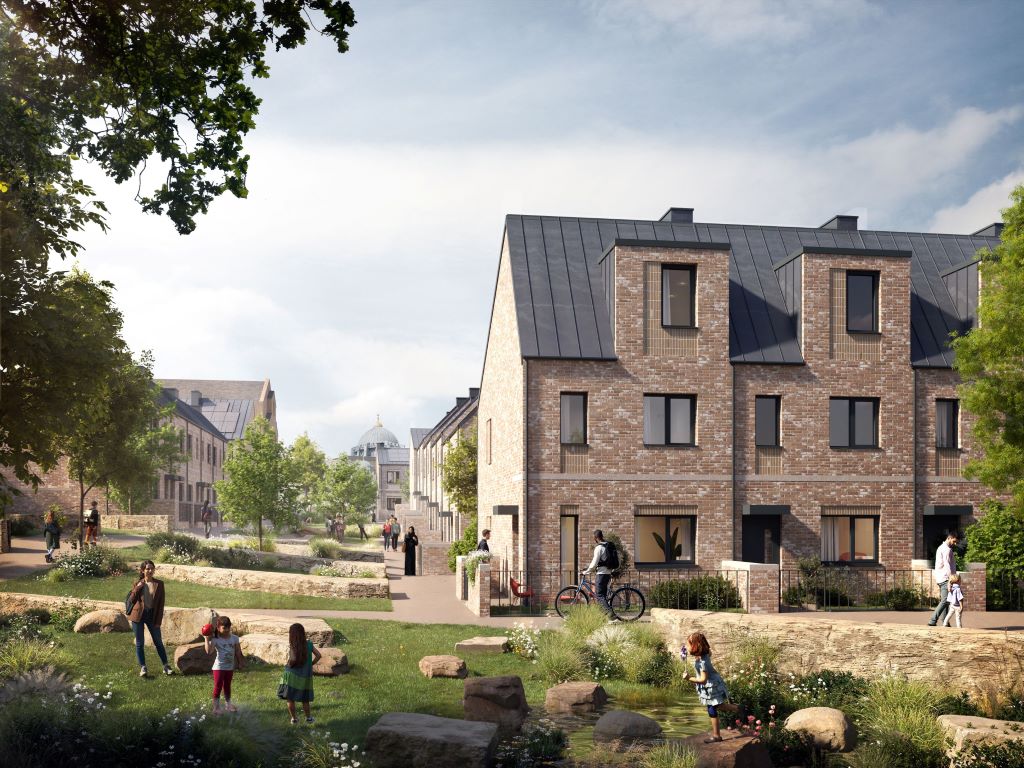
The City Village masterplan is designed around up to 1,000 homes and three new green spaces, supported by independent shops, hospitality venues and flexible office/business space. The initial development sites are council-owned: Kirkgate, Oastler and Chain Street.
Planning approval in 2026 unlocked the overall approach. Public consultation boards and council material describe a phased neighbourhood with townhouses, apartments, green spaces and active ground-floor uses. Council reporting has also identified early-stage homes on Oastler/Chain Street and later apartment-led phases around Kirkgate and Oastler.
The market-transition piece matters. The new Darley Street Market is a major enabling project, allowing the old Oastler and Kirkgate market functions to move before demolition and redevelopment. That reduces some delivery risk, but trader relocation, affordability and footfall impacts remain important watch points.
Partners, public bodies and funding
Bradford Council is the land/public-sector lead. ECF is the development partner and is the partnership between Muse, Homes England and Legal & General. A development agreement was signed to kick-start the first phase.
Homes England has confirmed £30m Brownfield Infrastructure and Land support for Bradford City Village. West Yorkshire Combined Authority has also backed Bradford city-centre regeneration, including Darley Street Market and related improvements. Bradford Council reports that the City Village masterplan proposes redevelopment of Kirkgate, Oastler and Chain Street, all owned by the council.
The funding and partner picture is strong, but the project is still phased. Later phases depend on demolition, serviced plots, planning conditions, forward funders/investors and market demand.
Planning and governance status
Bradford Council and Muse reported in early 2026 that Bradford City Village had been given the green light. The approved masterplan covers up to 1,000 homes across the Top of Town area, including Oastler, Kirkgate and Chain Street.
Council executive papers describe the scheme as a placemaking project supported by Homes England Brownfield Infrastructure and Land grant funding, with enabling works programmed across 2025-2029. They also refer to compulsory purchase and appropriation powers where needed to acquire third-party interests if private treaty acquisition fails.
This governance context matters. City Village is not just a planning permission; it is a public-led land and delivery programme requiring site clearance, market relocation, infrastructure, serviced plots and phased investment.
Timeline
| Date / period | Milestone |
|---|---|
| 2023-2024 | Bradford Council progresses City Village consultation and appoints/develops partner arrangements with ECF |
| 2024 | £30m Homes England support confirmed for City Village |
| 2024 | Bradford Council and ECF sign development agreement to kick-start the first phase |
| 2025 | Darley Street Market opens, helping enable Oastler/Kirkgate market transition |
| 2025-2029 | Council papers identify programmed enabling works and serviced plot creation |
| Early 2026 | City Village planning approval / green light reported by Bradford Council and Muse |
| 2027-2029 | Council papers indicate Kirkgate-related apartment phase after demolition, subject to programme and funding |
| 2032 onward | Later homes expected to be phased depending on forward funders/investors, according to council papers |
Property investor section
Bradford City Village is a major regeneration confidence signal because it directly tackles the city-centre retail problem: too much outdated retail floorspace, not enough residential population, and weak links between shopping, culture, markets and everyday neighbourhood life.
The positive case is that up to 1,000 homes in the Top of Town could increase footfall, support independent businesses and create a more active city centre beyond office/shopping hours. The scheme also benefits from public ownership of key sites, major institutional partners and the City of Culture legacy context.
The cautious case is phasing. Benefits will depend on demolition, temporary disruption, public-realm quality, management, affordability, retail/hospitality demand and how quickly homes are actually built and occupied. Rental impact is qualitative and should not be read as a price or rent forecast.
Investors should assess specific Bradford assets against current evidence: achieved rents, voids, tenant depth, service charges, building quality, walking routes to Forster Square and amenities, and whether the property benefits from completed improvements rather than future masterplan promises.
Risks and watch points
- Phasing: up to 1,000 homes will arrive over multiple phases, not all at once.
- Demolition disruption: Kirkgate/Oastler clearance can affect footfall and perception before new homes arrive.
- Trader relocation: the success of Darley Street Market and independent businesses matters to local confidence.
- Funding and forward investors: later phases depend on securing suitable funders/investors.
- City-centre demand: Bradford needs real occupier demand across affordable, rented and market homes.
- Public realm: green spaces and safer streets must be maintained after delivery.
- CPO/land interests: council papers reference statutory powers where needed.