
Project snapshot
| Item | Current evidence-led position |
|---|---|
| Project | Perry Barr Residential Scheme / Perry Barr regeneration |
| City | Birmingham |
| Area | Perry Barr, north-west Birmingham |
| Main site | Former Birmingham City University north campus and nearby plots |
| Phase One homes | 968 completed homes reported by Birmingham City Council |
| Wider legacy ambition | Around 1,400 homes has been used in project and design-team material |
| Original driver | Birmingham 2022 Commonwealth Games Athletes' Village and long-term housing legacy |
| Delivery partners | Birmingham City Council, Bovis / Lendlease management-contracting legacy, Kier, Willmott Dixon, Vinci UK, Arcadis and design/consultant teams |
| Transport works | New Perry Barr railway station and bus interchange, Sprint/bus and highway/public-realm changes |
| Status | Completed Phase One homes, continuing ownership/tenure/funding decisions, and wider Perry Barr regeneration still relevant |
| Investor reading | Strong infrastructure story, but governance and market-absorption risks need careful due diligence |
Location and strategic context
Perry Barr sits on a strategic corridor north-west of Birmingham city centre, close to the A34, Perry Barr railway station, bus routes, the Alexander Stadium area and surrounding residential neighbourhoods. The regeneration logic is that a large public-sector landholding, transport upgrades and Games-related investment could help create a denser residential quarter with better connections into the city.
The scheme should not be read as a single private development. It is a public-led regeneration programme combining housing, land assembly, infrastructure, Commonwealth Games legacy, affordable housing, station investment and long-term place-making. That makes the opportunity more substantial, but it also makes the risk profile more dependent on public finance, political decisions and market take-up.
What is proposed or delivered
The clearest delivered element is Phase One of the residential scheme. Birmingham City Council states that construction of 968 homes has been completed, alongside remaining social-value targets for the local community. The scheme was originally tied to the Athletes' Village concept, but delivery timing changed and the homes moved into a post-Games residential legacy role.
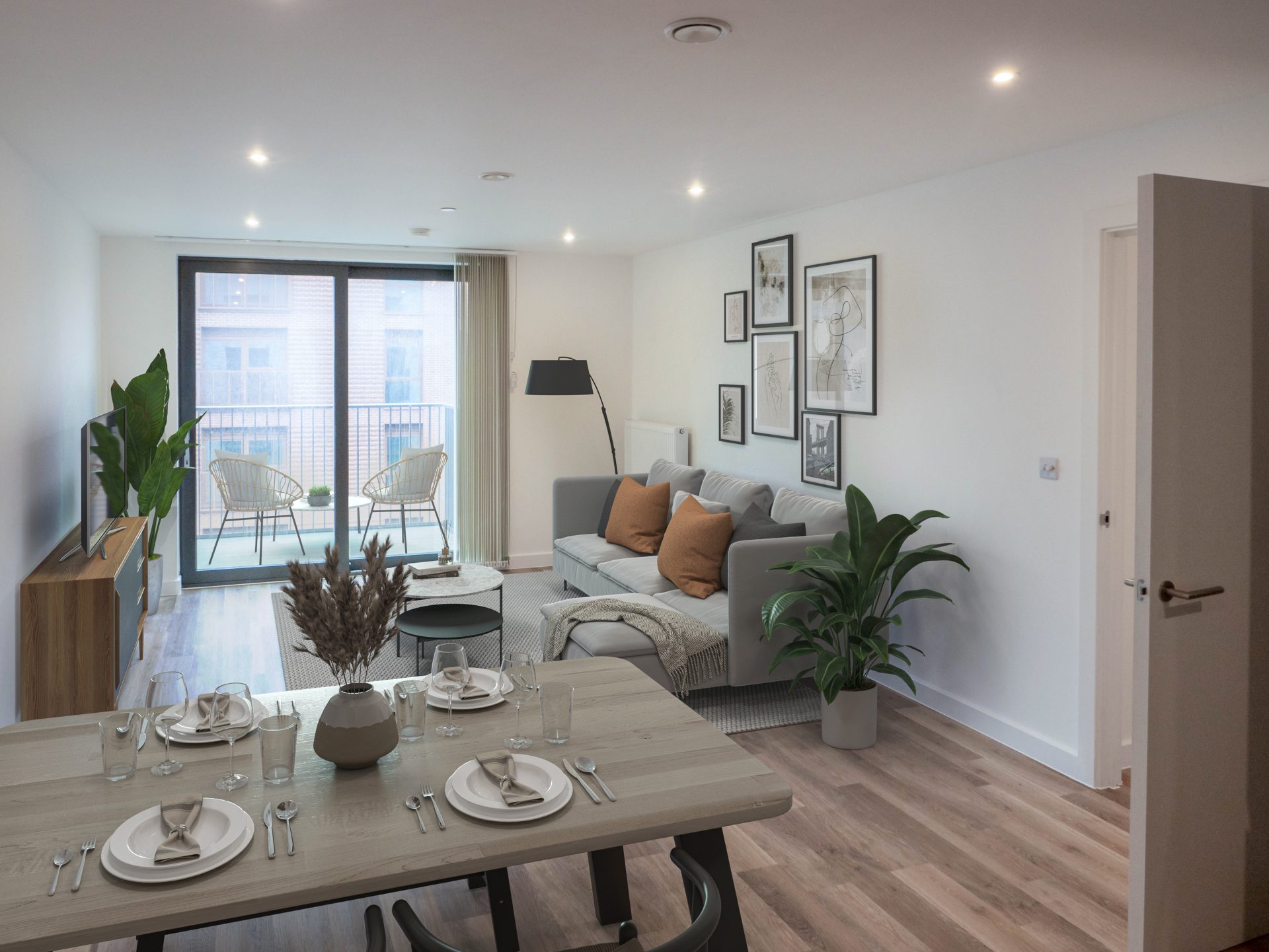
The homes are mainly apartment-led, with a strong emphasis on one- and two-bedroom units. Contractor and design-team sources describe the work as part of a wider regeneration programme, with new public realm, amenity space and supporting infrastructure intended to make the former university campus function as a neighbourhood rather than a stand-alone estate.
The surrounding transport programme is also material. Perry Barr station was rebuilt with a new bus interchange and better facilities, while Birmingham City Council and Transport for West Midlands present the work as part of the wider regeneration programme and a shift toward more accessible, people-friendly travel.
Partners, developers, public bodies and funding
Birmingham City Council is the central public body and land/regeneration sponsor. The wider funding and delivery story has involved the West Midlands Combined Authority, Homes England, transport bodies and several construction partners.
WMCA announced a £165m housing and infrastructure investment package in 2018 to support the Games Village and wider housing infrastructure. Later council decision-making has included Homes England grant support, including a reported £27m grant connected with Plot 6 affordable housing delivery.
The management-contractor and construction structure included Bovis / Lendlease legacy involvement, with Kier, Willmott Dixon and Vinci UK delivering major parts of the residential programme. Willmott Dixon describes Plots 8 and 9 as 430 apartments for private sale and rent. Legal & General Affordable Homes announced in December 2024 that it had acquired 487 affordable homes from Birmingham City Council in Perry Barr.
Planning and governance status
The most important planning/governance point is that Perry Barr has moved beyond concept-stage regeneration. Homes and transport infrastructure have been built. However, the governance story is still active because tenure, disposal, debt, affordable-housing ownership and lessons-learned questions remain part of the scheme's legacy.
This is where the report needs careful wording. The project is not simply "delayed" or "planned"; major assets exist. But it is also not a clean, risk-free regeneration success story. Public reporting in 2024 highlighted proposed disposal of hundreds of homes at a substantial public-sector loss, while the council argued that disposal and affordable-housing arrangements were needed to reduce ongoing liabilities and bring homes into use.
Timeline
| Date / period | Milestone |
|---|---|
| Pre-2018 | Former Birmingham City University campus identified as a major Perry Barr regeneration opportunity |
| 2018 | WMCA announces £165m housing and infrastructure investment to support the Commonwealth Games Athletes' Village and wider housing legacy |
| 2019-2022 | Residential construction and transport works progress alongside Games preparations |
| 2021 | Bus interchange plans progress as part of Perry Barr regeneration |
| 2022 | Perry Barr station and bus interchange works complete in time for the Games period; Athletes' Village use changes because accommodation is delivered elsewhere |
| 2024 | Public scrutiny grows around completed but under-occupied homes, disposal options and council financial exposure |
| December 2024 | Legal & General Affordable Homes announces acquisition of 487 affordable homes from Birmingham City Council in Perry Barr |
| 2025-2026 | Further council decisions continue around plot appropriation, Homes England grant and affordable-housing delivery |
Property investor section
Perry Barr is a classic "infrastructure plus housing delivery" regeneration case, but investors should separate evidence from optimism. The evidence is that new homes exist, the station and bus interchange have been upgraded, the area has received substantial public investment, and institutional/affordable-housing ownership has entered the scheme. Those points can improve local confidence and create a clearer residential identity over time.
The caution is equally important. One- and two-bedroom apartment absorption has been a live issue, and public reporting has described valuation, disposal and debt concerns. Investors should test resale comparables, service charges, block management, mortgageability, rental depth, void risk, tenant demand and the actual pace at which occupied homes replace empty or transitional stock.
Rental impact is qualitative and should not be read as a price or rent forecast. The strongest due-diligence question is not "will regeneration push prices up?", but "does the delivered transport, public realm, tenure mix and occupancy pattern make this specific property more resilient than alternatives nearby?"
Risks and watch points
- Market absorption: apartment supply needs real occupier demand, not just regeneration branding.
- Public finance: council debt, disposal value and grant conditions can shape future decisions.
- Tenure mix: affordable, private rent, private sale and council-retained units may perform differently.
- Empty-home legacy: earlier vacancy headlines can affect buyer and lender confidence until occupation is visibly normalised.
- Management quality: estate management, service charges, public realm maintenance and block stewardship are critical.
- Transport benefits: station and bus improvements are positive, but their value depends on everyday frequency, reliability and walking routes.
- Wider Perry Barr pipeline: future phases and surrounding sites could support the neighbourhood, but should be treated as conditional until funded and delivered.