
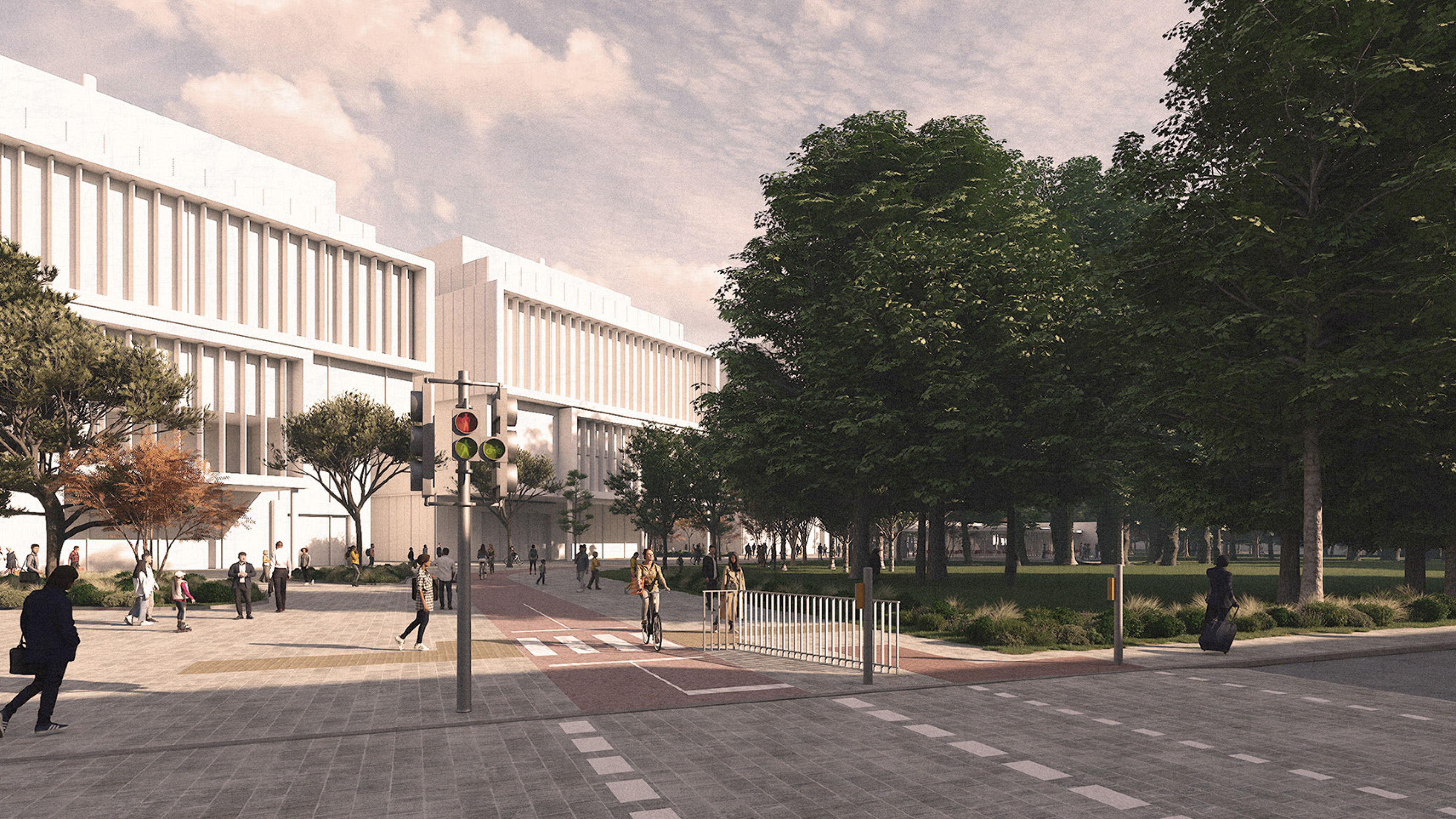
Paddington Village represents the physical and strategic core of Liverpool’s ambition to transition into a globally significant life sciences and innovation hub. Positioned within the city’s £1 billion Knowledge Quarter (KQ Liverpool), the wider 30-acre site is currently advancing through a highly structured, multi-phase delivery strategy. Following the successful delivery of early anchor assets in the 'Paddington Central' phase, most notably the striking 160,000 sq ft Spine building, the Novotel hotel, and the Kaplan International College facility, strategic focus and public funding have now decisively shifted to the 9-acre southern zone formally known as 'Paddington South' (Source: Invest Liverpool, Paddington Village South Project Team, Place North West).
The extensive primary evidence indicates that Paddington South is moving rapidly from a conceptual masterplan into an active pre-development and procurement phase. The demolition of the former Smithdown Lane police station, completed by main contractor Morgan Sindall in 2025, successfully cleared the primary eastern development plots to pave the way for enabling works (Source: University of Liverpool). In March 2026, Liverpool City Council, in joint partnership with the University of Liverpool, launched a major statutory public consultation on the updated masterplan for this phase (Source: news.liverpool.ac.uk, liverpoolcityregion-ca.gov.uk, liverpoolexpress.co.uk). The headline proposition centres on approximately 538,000 sq ft (50,000 sq m) of gross development potential, which is anchored by a fully funded £111 million chemical sciences facility. Crucially, this building will house the flagship £100 million AI Materials Hub for Innovation (AIM-HI), accompanied by state-of-the-art commercial laboratories, incubators, and high-quality public realm designed to foster academic and industrial collaboration (Source: University of Liverpool, propertistics.co.uk, Paddington South Project Team, Liverpool Chamber).
For property investors, developers, and institutional funders, the central analytical judgement is that Paddington Village has matured well beyond speculative municipal planning. It is now underpinned by tangible, long-term structural drivers. The site sits at the geographic heart of the government-backed Liverpool City Region Life Sciences Investment Zone, which has unlocked £160 million in direct funding (Source: University of Liverpool). Furthermore, it benefits from robust institutional backing from the University of Liverpool, which is currently executing an overarching £1 billion Estate Strategy 2031+ designed to elevate the institution into the global top 100 (Source: liverpoolexpress.co.uk).
However, the housing, rental, and demographic impacts of this vast capital injection will be profoundly localised. The development sits firmly within the L7 postcode district, incorporating wards such as Kensington and Fairfield, an area historically characterised by traditional Victorian terraced housing, exceptionally high student populations, and discounted property values relative to the national average. Local property evidence from February 2026 demonstrates an L7 median completed sales price of just £137,000. The insertion of world-class life science laboratories, operational net-zero commercial spaces, and an anticipated influx of highly paid professionals, academics, and international researchers into this specific micro-market creates a compelling, fundamental demand driver for high-quality residential accommodation .
The primary execution risk for the wider masterplan no longer relates to early-stage funding, but rather to the successful integration of complex transport infrastructure. Specifically, the viability of the site relies heavily on the proposed 20-year Urban Mobility and Public Spaces Plan and the delivery of the conceptual 'Paddington Lime Line' trackless tram to overcome the topographical separation from Lime Street station . Furthermore, the timely procurement of private-sector development partners for subsequent northern residential and commercial phases will dictate the ultimate pace of gentrification. While the macroeconomic narrative is exceptionally strong, investors should adopt a cautious, long-term operational horizon, recognising that the most significant local housing market shifts will align with the delivery of the main chemical sciences building and the Hemisphere workspace structures, both targeted for substantial completion and occupation around 2028 to 2031 (Source: University of Liverpool).
2. Project overview

Paddington Village is the flagship spatial regeneration site within KQ Liverpool, an expansive 450-acre urban innovation district spanning the eastern edge of the city centre. The underlying strategic rationale of the Knowledge Quarter is to physically and economically connect Liverpool’s world-leading academic institutions, namely the University of Liverpool and Liverpool John Moores University, with its premier clinical and research assets, including the Royal Liverpool University Hospital and the historic Liverpool School of Tropical Medicine (Source: Invest Liverpool). Paddington Village serves as the dedicated, purpose-built commercial and residential ecosystem designed to bind these distinct institutions together.
The 30-acre Paddington Village site was originally structured around a tripartite Spatial Regeneration Framework (SRF), formally adopted by Liverpool City Council to guide massing, land use, and architectural standards . The framework systematically divides the topography into three distinct operational zones, each fulfilling a specific economic and social function within the wider innovation district.
The first of these zones, Paddington Central (Phase 1), spans 11 acres and forms the commercial and civic core of the site. This phase is already substantially advanced and largely operational. It hosts 'The Spine', an iconic 160,000 sq ft, 14-storey headquarters for the Royal College of Physicians that features a distinctive ceramic facade of 23 million Voronoi polygons and operates as one of the healthiest workspaces in the world under the Platinum WELL standard (Source: Paddington Village South Project Team, Place North West). Paddington Central is also home to the newly constructed Kaplan Liverpool International College, a £35 million live-learn facility, alongside a £20 million multi-storey car park and a dedicated district heat network energy centre (Source: Place North West).
The second zone, Paddington South (Phase 2), encompasses 9 acres and represents a predominantly research, academic, and innovation-led campus that intentionally blends into mixed-use community facilities . This area is the current focal point of active public consultation and imminent capital delivery. The land is jointly owned by Liverpool City Council and the University of Liverpool, a critical factor that severely reduces the speculative land-banking risks typically associated with large-scale brownfield regeneration (Source: Invest Liverpool, liverpoolcityregion-ca.gov.uk, liverpoolexpress.co.uk).
The final zone, Paddington North (Phase 3), is explicitly earmarked for future medium-to-high density residential development. This phase is intended to provide the necessary housing infrastructure for the incoming workforce, with architectural massing designed to complement the scale and historic form of the adjacent Kensington Fields community .
The commercial delivery of the Knowledge Quarter is managed through a highly sophisticated web of public-private partnerships. The primary vehicle for the speculative and pre-let commercial laboratory space is Sciontec, a spin-out development company jointly owned by KQ Liverpool, Bruntwood SciTech, Liverpool John Moores University, the University of Liverpool, and Liverpool City Council . This joint-venture structure is analytically significant; it ensures that land disposal mechanisms, municipal planning policy, and specific academic research requirements are tightly aligned.
The broader macroeconomic context is firmly framed by the city region's recent designation as a Life Sciences Investment Zone. This critical statutory status unlocks £160 million in direct government funding, driving collaborative initiatives across both Sci-Tech Daresbury and KQ Liverpool. The overarching goal of the zone is to double employment in the life science sector, driving the creation of more than 4,000 new highly skilled jobs by 2030, and generating over £320 million in direct private-sector match funding (Source: University of Liverpool). Within this city-wide economic pivot, Paddington Village operates as the indispensable spatial anchor.
3. Official scheme details and delivery timeline
Current development momentum and municipal focus are concentrated almost entirely on the 9-acre Paddington South masterplan and the remaining commercial plots within Paddington Central. The Paddington South site, bounded by Grove Street, Smithdown Lane, and Oxford Street, entered a formal statutory public consultation period running from 9 March to 19 April 2026, marking the transition from internal institutional planning to public-facing delivery (Source: news.liverpool.ac.uk, liverpoolcityregion-ca.gov.uk, Paddington South Project Team).
The masterplan for Paddington South outlines approximately 538,000 sq ft (50,000 sq m) of total development capacity. Following essential enabling works and the targeted demolition of the former Smithdown Lane police station in 2025, the eastern section of the site has been meticulously carved into a series of initial development plots designed to host world-class infrastructure (Source: Invest Liverpool, University of Liverpool, propertistics.co.uk).
The most defensible public description of the immediate Paddington South delivery phases is structured as follows, based on official consultation documentation and university disclosures:
| Development Plot / Facility | Description and Strategic Function | Estimated Capital Value |
|---|---|---|
| Chemical Sciences Innovation Building | A flagship academic and research facility for the University of Liverpool, designed to house advanced chemistry innovation and education. | £111 million (Source: University of Liverpool, propertistics.co.uk) |
| AIM-HI (AI Materials Hub for Innovation) | A globally significant national facility embedded within the chemical sciences building, dedicated to accelerating the application of artificial intelligence in materials chemistry to address global net-zero challenges. | £100 million (Source: propertistics.co.uk, Liverpool Chamber) |
| Commercial Laboratories and Workshops | Two dedicated commercial buildings designed to provide essential 'grow-on' space for spin-outs and established life science firms, facilitating industry collaboration. | Privately Funded / Undisclosed (Source: Invest Liverpool, propertistics.co.uk) |
| Innovation Incubator | A translational space operating alongside the laboratories, designed specifically to foster collaboration between academic researchers and industrial partners to support the creation of new spin-out enterprises. | Integrated within core scheme (Source: liverpoolcityregion-ca.gov.uk, propertistics.co.uk) |
| Community Pavilion and Public Realm | A multi-functional architectural pavilion catering to both community and commercial purposes (retail, F&B), set within a 3-acre "green lung" designed to deliver a strict 10% biodiversity net gain (BNG). | Integrated within core scheme (Source: Invest Liverpool, news.liverpool.ac.uk, Paddington South Project Team) |
| Paddington North Allocation | Approximately 50,000 sq m (538,000 sq ft) of future development capacity towards the north of the site, designated for future residential provision, further commercial expansion, and education space. | Subject to future procurement (Source: University of Liverpool, propertistics.co.uk) |
Running parallel to the Paddington South academic masterplan is the ongoing commercial delivery of the remaining Paddington Central plots, spearheaded by Sciontec. The most critical of these impending assets is HEMISPHERE One, a £61 million, 117,190 sq ft (net) commercial laboratory and workspace building . Following a comprehensive design review showcased at the international MIPIM real estate conference in March 2026, the architectural trajectory for HEMISPHERE One was significantly altered. The developer pivoted from a contemporary aluminium facade to a traditional, robust red-brick aesthetic . This decision, executed by AHR Architects, deliberately aligns the building with Liverpool's historic dockland vernacular, referencing the 1901 Stanley Dock Tobacco Warehouse, while acknowledging how those original proportions influenced the architecture of New York's SoHo district .
Main contractor Morgan Sindall has been appointed to deliver the scheme, which will employ multiple teams of up to 60 bricklayers over a 22-month build programme. The building is designed to achieve some of the most stringent environmental accreditations in the UK commercial sector, targeting operational Net-Zero, Platinum WELL, BREEAM Excellent, EPC A, WiredScore certification, and a NABERS 5.5* rating . A subsequent phase, HEMISPHERE Two, is already progressing through the planning pipeline to satisfy soaring demand for high-containment Category 2 and 3 laboratories, pushing the combined Sciontec delivery target to nearly 350,000 sq ft across the two buildings .
The sequencing of these vast institutional investments requires careful tracking for real estate due diligence. The delivery path below represents the best-supported sequence of events based on the University of Liverpool Estate Strategy 2031+ and official council programme updates.
| Phase / Asset | Planning & Enabling Status | Target Start on Site | Target Operational Completion |
|---|---|---|---|
| Smithdown Lane Site Prep | Demolition completed 2025 | N/A | Complete (Source: University of Liverpool) |
| Paddington South Masterplan | Public consultation Q2 2026 | N/A | Formal adoption pending (Source: news.liverpool.ac.uk, liverpoolcityregion-ca.gov.uk) |
| HEMISPHERE One | Preferred contractor appointed (Morgan Sindall) | Late 2026 (estimated) | 2028 |
| HEMISPHERE Two | Pre-planning / concept design | Subject to future tender | Post-2028 |
| Phase 1 Paddington South (Chem Sciences) | Business case approved July 2025 | Late 2027 | 2031 (Source: University of Liverpool) |
| Paddington North (Residential) | Long-term strategic allocation | Post-2029/2030 | Dependent on future market cycles (Source: Invest Liverpool, propertistics.co.uk) |
Note: These timelines are analytical projections based on stated public goals and published university estate strategies. Complex procurement cycles, detailed planning determinations, and central government funding drawdowns may adjust these operational dates.
4. Planning, infrastructure and transport context
4.1 Planning Framework
Paddington Village is underpinned by a robust and highly structured statutory planning framework. The original Spatial Regeneration Framework (SRF) was adopted by Liverpool City Council to establish the foundational principles of massing, use-class distribution, public realm integration, and tall-building clustering across the 30-acre site . This overarching vision is explicitly codified in the draft Liverpool Local Plan 2025-2041 under Policy CC4, which formally designates Paddington Village as a focal point for offices, research and development, laboratory facilities, educational uses, and "appropriate residential that supports the area's primary role and function" .
The current 2026 public consultation for Paddington South should not be viewed as a speculative rezoning exercise, but rather as an evolutionary masterplan amendment. It seeks to update the original SRF parameters to accommodate the highly specific spatial and technical requirements of the newly funded £100m AIM-HI facility and to adapt to the shifting post-pandemic demands of the commercial life sciences sector (Source: news.liverpool.ac.uk, propertistics.co.uk). Because the underlying land is jointly owned by the city council and the university, standard commercial land-banking risks are largely neutralised; planning applications in this zone function primarily as delivery mechanisms for fully funded institutional strategies rather than speculative asset-flipping exercises.
4.2 Transport Connectivity and the Urban Mobility Plan
Infrastructure integration represents the single most complex execution challenge facing the Knowledge Quarter. The district sits on a geographic escarpment above the primary retail core, creating a topographical barrier, locally referred to as 'the uphill walk', that historically separated the university precinct from the primary regional rail hub at Lime Street station .
To comprehensively address this structural deficiency, Liverpool City Council is advancing the Liverpool Urban Mobility and Public Spaces Plan, a sweeping 20-year masterplan recommended for approval in January 2025 . This strategy aims to radically overhaul city-centre movement, prioritising active travel and mass transit to align with municipal net-zero targets. The most ambitious element of this mobility strategy associated directly with KQ Liverpool is the conceptual 'Paddington Lime Line'. Explored extensively in KQ Liverpool's Transport Vision documents, this proposal outlines a high-tech, eco-friendly transit system, potentially adopting trackless tram or light rail technologies, running up the Brownlow Hill corridor. The Lime Line is designed to seamlessly connect Lime Street station with the universities, the hospital trust, and the Paddington Village development, thereby eliminating the topographical barrier and providing a 24-hour transit link for shift workers, researchers, and residents .
While the Lime Line remains in the feasibility, design, and funding stages, immediate transport infrastructure investment has heavily focused on active travel. The £50 million city centre connectivity programme has already delivered significant public realm upgrades, severing outdated carriageways around Lime Street and enhancing dedicated walking and cycling corridors into the Knowledge Quarter . Furthermore, the Paddington South masterplan explicitly integrates safe and accessible active travel routes, aiming to re-establish Crown Street as a primary pedestrian connection and fundamentally redesign the Grove Street corridor into a greener, pedestrian-friendly boulevard (Source: University of Liverpool, news.liverpool.ac.uk, liverpoolcityregion-ca.gov.uk).
4.3 Energy Infrastructure and Sustainability
Paddington Village operates as a national exemplar of sustainable urban energy infrastructure, a critical factor for institutional real estate investors governed by strict ESG (Environmental, Social, and Governance) mandates. The site already benefits from a dedicated £20 million Combined Heat and Power (CHP) plant and an integrated district heating network (Source: Place North West).
Furthermore, the wider city is rapidly scaling up its sustainable energy capabilities. The Department for Energy Security and Net Zero's Heat Network Zone Opportunity Report highlights the expansion of the Mersey Heat network, operated by Peel NRE, which utilises advanced water source heat pumps drawing from the Leeds & Liverpool Canal . The University of Liverpool’s institutional commitment to "delivering energy as a service" by 2030, which is deeply embedded in its Estates Strategy 2031+, ensures that all future commercial and residential assets within Paddington Village will align with the highest possible decarbonisation standards . This pre-existing energy infrastructure provides a significant competitive advantage when attracting blue-chip corporate tenants and high-value life science occupiers who require energy-intensive, high-containment laboratories while strictly adhering to corporate net-zero pledges.
5. Local economy implications
The economic narrative driving the regeneration of Paddington Village represents a deliberate and structural shift in Liverpool's macroeconomic profile. Historically reliant on the public sector, traditional retail, and maritime logistics, the city region is actively and successfully pivoting toward high-value, knowledge-intensive industries, specifically health, life sciences, and advanced materials chemistry .
The Liverpool City Region Life Sciences Investment Zone designation serves as the primary financial catalyst for this transition. By doubling the original central government funding allocation to £160 million and extending the operational benefit period to ten years, the zone provides a highly competitive suite of interventions . These include powerful tax incentives for relocating businesses, 100% local business rate retention mechanisms to fund further infrastructure, and direct capital grants for innovation (Source: University of Liverpool). The University of Liverpool is matching this municipal ambition with a strategic commitment to invest up to £200 million into the zone over the coming decade, solidifying the academic-commercial partnership .
The physical delivery of the AIM-HI facility and the Sciontec commercial laboratories at Paddington South directly addresses a well-documented structural market failure in the UK economy: the chronic regional shortage of high-specification laboratory space needed to retain successful university spin-outs . Historically, promising regional intellectual property has migrated to the established 'Golden Triangle' of London, Oxford, and Cambridge to scale operations. By providing Category 2 and 3 laboratories, digital incubator space, and 'grow-on' commercial facilities directly adjacent to the academic institutions generating the research, Liverpool ensures that intellectual property can be commercialised, manufactured, and scaled locally (Source: propertistics.co.uk).
The broader economic implications for the city region are profound:
- High-Value Job Creation: The Life Sciences Investment Zone explicitly targets the creation of 8,000 new jobs by 2030 (Source: University of Liverpool). Paddington Village, operating as the spatial epicentre of this zone, is estimated to host a significant proportion of these highly skilled, high-wage roles.
- Multiplier Effects and GVA: The influx of life-science professionals, data scientists, clinical researchers, and AI specialists will inject a remarkably high-wage demographic into the local economy. This creates robust, quantifiable multiplier effects for local retail, leisure, hospitality, and secondary service sectors, driving overall Gross Value Added (GVA) across the city centre .
- Catalytic Inward Investment: The physical presence of anchor institutions (such as the Royal College of Physicians) and globally unique flagship facilities (like the £100m AIM-HI) serves as a powerful magnet for global pharmaceutical, technology, and biotechnology firms. Corporations such as TriRx, Seqirus, and AstraZeneca already maintain significant manufacturing footprints in the wider region (e.g., Speke), and the provision of premium R&D space at Paddington Village allows these multinationals to co-locate their research divisions adjacent to academic talent .
6. Housing market implications
To accurately analyse the housing market impact, it is essential to first establish the baseline demographic and valuation data of the immediate locality. Paddington Village sits squarely within the L7 postcode district, encompassing inner-city wards such as Kensington and Fairfield, Edge Hill, and parts of Picton .
6.1 The L7 Baseline
Platform evidence based on completed transaction volumes from February 2026 shows an L7 median completed sales price of just £137,000. To provide crucial context, Liverpool's city-wide average house price hovers significantly higher, generally tracking around the £177,000 mark for the wider metropolitan area.
The L7 micro-market is historically and physically characterised by dense, traditional Victorian terraced housing. Due to its immediate geographic proximity to the primary university campuses, a vast proportion of this historic housing stock has been aggressively converted into Houses in Multiple Occupation (HMOs) serving the undergraduate student market. This has created a hyper-localised property market driven almost entirely by student yields rather than owner-occupier capital appreciation or premium residential standards.
6.2 The 'Knowledge Quarter Premium' Effect
The delivery of Paddington Village is likely to exert a split, yet profound, effect on the L7 and adjoining L3 (city centre) housing markets over the coming decade:
- Immediate Micro-Market Gentrification: The introduction of over £250 million in gross development value at Paddington South alone, coupled with high-quality public realm, enhanced biodiversity, and a new demographic of highly paid professionals into a historically discounted area, acts as a textbook structural demand driver (Source: news.liverpool.ac.uk, liverpoolexpress.co.uk). Properties immediately adjacent to the Grove Street and Crown Street corridors, particularly those that offer proximity to the new 3-acre "green lung," are likely to see sustained upward valuation pressure as the masterplan moves from the construction phase to full occupation (2028-2031).
- Product Shift (Quality over Quantity): The new incoming workforce, comprising PhD researchers, AI specialists, clinical trial managers, and corporate executives, will demand a fundamentally different residential product than the existing L7 HMO stock can provide. They will seek premium, purpose-built apartments, institutionally managed build-to-rent (BTR) developments, and high-specification townhouses . The 'Paddington North' phase of the SRF, explicitly earmarked for medium-to-high density residential development, will eventually supply this precise product, creating a new premium micro-market that currently does not exist in L7.
- Cautious Valuation Outlook: It is analytically vital for investors not to apply a simplistic "blanket uplift" assumption to all traditional L7 terraces. While underlying land values and general market sentiment will undoubtedly improve due to the infrastructure spend, outdated or poorly managed student HMOs may actually face severe valuation headwinds. If the local tenant base aggressively transitions toward young professionals demanding modern amenities, super-fast broadband, and high EPC ratings, traditional unrenovated student stock will suffer void periods. The 'Knowledge Quarter Premium' will be disproportionately awarded to best-in-class assets, new-build modern apartments, and period properties that successfully undergo heavy capital expenditure to transition to the professional market.
7. Rental market implications
The rental market dynamics in the immediate vicinity of Paddington Village are currently heavily skewed by distinct demographic realities. ONS census and ward profile data for Kensington & Fairfield highlights that an astonishing 35.75% of the local population are formally classed as students, a figure that sits 15.33% above the overall national average .
As the commercial and academic phases of Paddington Village mature, the local rental market is expected to undergo a highly visible, structural transition:
- From Undergraduate to Postgraduate/Professional: The influx of thousands of high-value jobs across the wider Investment Zone will fundamentally alter the tenant profile. Renters associated with the AIM-HI facility, the chemical sciences building, and the Hemisphere commercial laboratories will possess significantly higher disposable incomes and corresponding expectations for living standards compared to the legacy undergraduate base.
- Rental Value Premium: Purpose-built rental stock that provides immediate walking proximity to Paddington Village, paired with high ESG credentials, secure parking, active travel storage, and premium amenities, should command a notable and defensible rental premium over the standard L7 terrace averages.
- Corporate Lettings and Serviced Accommodation: The presence of the Royal College of Physicians at The Spine, coupled with international technology firms, global pharmaceutical researchers, and visiting global academics attending the innovation incubators, will create a robust, resilient market for short-to-medium term corporate lettings. High-end serviced accommodation in the immediate periphery of the site will be highly sought after to house visiting professors and corporate executives overseeing clinical trials or product translation (Source: Place North West, propertistics.co.uk).
Investors evaluating the rental market should treat the period up to 2028 (when HEMISPHERE One completes) as an anticipatory phase. The most significant and sustained shift in high-value private rental demand will occur post-2031, strictly aligning with the operational opening and staffing of the £111 million chemical sciences building and the AIM-HI facility (Source: University of Liverpool).
8. Supply, demographics and demand drivers
Liverpool's broader demographic context is complex and requires careful navigation. The city boasts a 2024 mid-year population estimate of 508,961. However, official ONS labour market data from May 2024 reveals a working-age employment rate of 67.5%, which sits below the North West regional average, and a relatively high economic inactivity rate of 26.1% .
Paddington Village is an aggressive, spatially concentrated intervention designed specifically to alter this macroeconomic trajectory. By focusing exclusively on highly skilled, resilient sectors, the masterplan functions as a deliberate demographic engineering tool designed to retain graduate talent and attract international expertise. Within the specific Kensington & Fairfield ward, the median age is a youthful 26.6, driven by the student population, while 67% of the population were born in the UK . The regeneration aims to age this demographic up slightly, retaining those students as high-earning professionals.
8.1 Balancing Commercial and Community Needs
A key analytical observation derived from the 2026 Paddington South consultation materials is the deliberate, statutory effort to prevent the site from becoming an isolated, sterile corporate science park. The masterplan explicitly allocates significant spatial footprints for a multi-functional community pavilion, vibrant public event spaces, and a 3-acre green lung (Source: Invest Liverpool, Paddington South Project Team). This landscaping is not merely decorative; it is legally mandated to deliver a 10% biodiversity net gain (BNG) in line with the University's Estates Strategy and national planning policy (Source: news.liverpool.ac.uk).
This social infrastructure is absolutely crucial for long-term residential absorption. High-earning demographics demand sophisticated 'place-making', immediate access to independent cafes, high-quality green spaces, walkability, and community infrastructure. By embedding these elements early in the Phase 2 masterplan, the developers and the city council are actively de-risking the future 'Paddington North' residential phases. If the area is successfully perceived by the market as a vibrant, integrated neighbourhood rather than just a clinical employment zone, subsequent residential demand will be significantly stronger and more resilient to broader economic cycles.
8.2 Scenario Outlook
The table below provides a cautious analytical scenario model for the micro-market impact of the Paddington South development (Phase 1 delivery to 2031). It uses current baselines and assumes the successful delivery of the £111m facility and associated commercial space. *Note: This is an analytical framework based on property fundamentals, not a guaranteed financial forecast.*
| Scenario | Delivery Assumption by 2031 | Core Tenant Demographic Shift | Micro-Market Residential Demand | Broad Effect on local L7 Values vs City Average |
|---|---|---|---|---|
| Pessimistic | Protracted funding delays; only core academic building completes; private commercial plots stall due to macro conditions. | Incremental increase in PhD/academic staff; heavy reliance on existing student base remains. | Marginal increase in demand; absorption handled easily by existing, unrenovated L7 stock. | Broadly tracks the wider Liverpool average; minimal new-build premium established. |
| Central | AIM-HI, Chemical Sciences, and HEMISPHERE One complete on schedule; pavilion and park delivered. | Noticeable shift towards life-science professionals, postgraduates, and corporate tech workers. | Strong demand for high-quality apartments/BTR; traditional HMO stock begins forced transition to professional lets. | Noticeable outperformance in immediate adjacent streets (Grove St/Crown St); new-builds command strong premium. |
| Optimistic | Full Phase 1 delivery plus early commencement of Paddington North residential; Lime Line transport secures funding. | Rapid, sustained gentrification; influx of highly paid international talent and domestic corporate relocations. | Acute shortage of premium stock; rapid absorption and off-plan success of any new residential phases. | Significant micro-market re-rating; L7 sheds historical discount relative to the city centre. |
9. Investor watchpoints and risks
While the strategic narrative and institutional funding commitments are formidable, professional investors conducting due diligence must actively monitor several live execution risks:
- Transport Infrastructure Lag: The Knowledge Quarter's connectivity to the central transport hubs (specifically Lime Street) is currently reliant on traditional road networks and walking uphill. While the 'Paddington Lime Line' (trackless tram) is a visionary and necessary solution, it remains conceptual and subject to future strategic business cases . If thousands of new jobs are created at Paddington Village without a concurrent leap in public transport capacity, local traffic congestion and parking friction could severely detract from the area's premium appeal to corporate tenants.
- Phase Slippage and Macro-Economics: The timeline is highly ambitious. The target of 2031 for the operational opening of the chemical sciences building requires seamless public procurement, rapid planning approval, and sustained, uninterrupted funding environments. Inflationary pressures in the UK construction sector, which recently prompted the redesign of HEMISPHERE One to a brick facade to manage costs and aesthetics, remain a persistent threat to commercial viability and delivery sequencing .
- Planning Friction and Density: While the overarching SRF provides a strong municipal safety net, the detailed massing, height, and residential mix of future phases (particularly the Paddington North residential phase adjacent to Kensington Fields) may face concerted local opposition. Balancing the need for high-density innovation and housing with existing community sensitivities requires careful, prolonged municipal navigation, which can delay land disposals .
- Stock Mismatch and Capital Expenditure: For private buy-to-let investors acquiring existing stock in L7, the current availability is predominantly low-EPC Victorian terraces suited for the undergraduate market. Transitioning these specific assets to meet the exacting standards of corporate life-science professionals requires significant capital expenditure (heavy retrofitting, energy efficiency upgrades, reconfiguration). Investors acquiring unrenovated L7 stock on the assumption of an automatic, passive valuation uplift may face severe stranded-asset risks if they fail to elevate the product quality to match the incoming high-value demographic.