
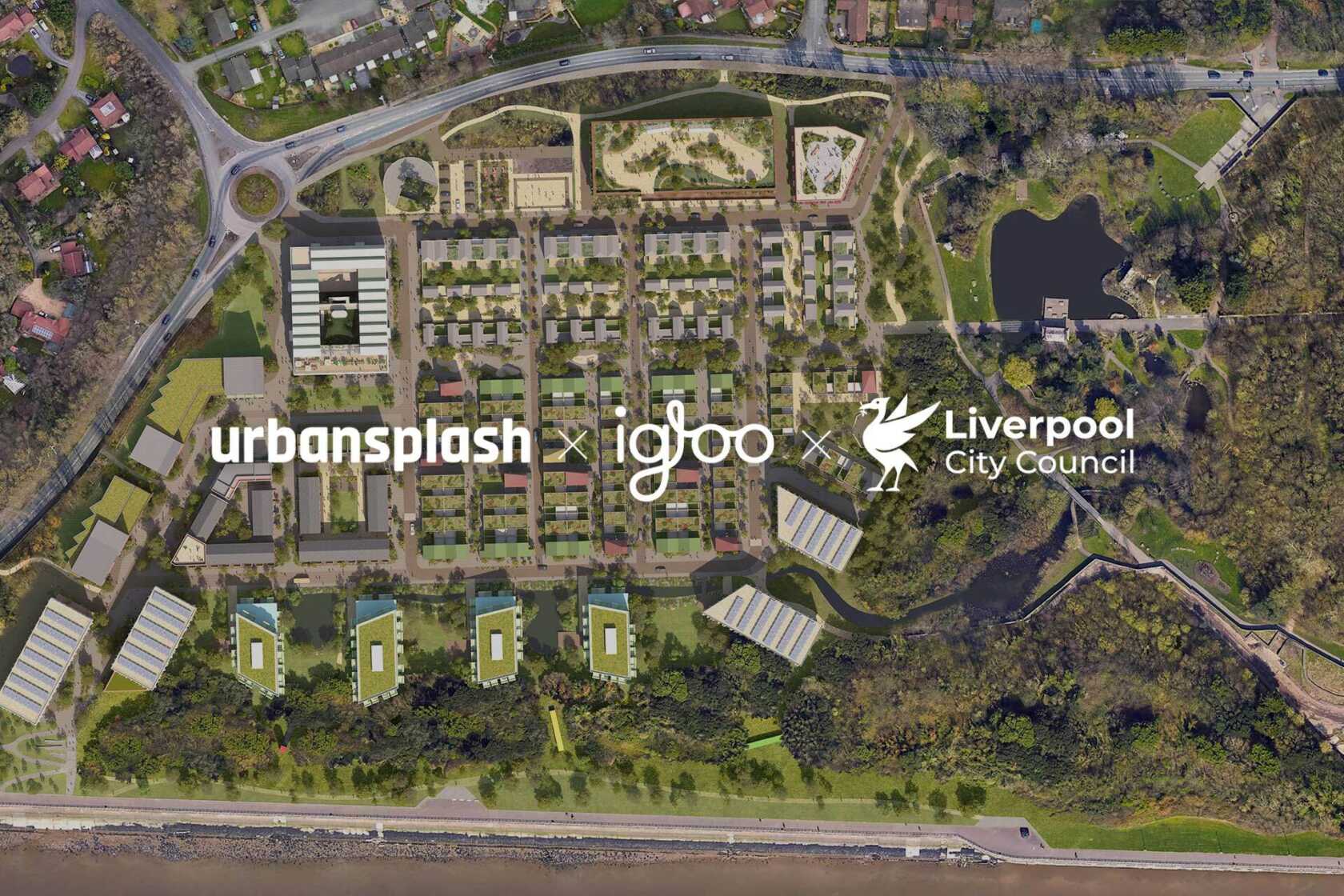
The regeneration of Festival Gardens represents one of the most strategically significant brownfield residential interventions currently advancing in the North West of England. Located within the highly affluent L17 postcode district on the South Liverpool waterfront, the 27-acre development zone is the final phase of a complex, 40-year remediation and civic-planning narrative. Following the successful completion of a £53m publicly funded land remediation programme in the summer of 2023, Liverpool City Council officially appointed a joint venture between Urban Splash and igloo Regeneration in late 2025 to act as the master development partners (Source: igloo Regeneration, Urban Splash). The strategic trajectory for the site points toward the submission of a detailed planning application for the first phase of 440 homes in late 2026, with vertical construction targeted to commence in the spring of 2027 (Source: Urban Splash, Invest Liverpool).
For institutional capital and private property investors, the central analytical judgement is that Festival Gardens has matured from a highly speculative, headline-driven masterplan into a credible, infrastructure-first residential delivery pipeline. Earlier mid-2010s iterations for the site, which previously included proposals for an indoor waterpark, a new Mersey Ferry terminal, and up to 3,000 high-density residential units, have been formally discarded by the local authority (Source: Urban Splash, Place North West). Instead, the current council-backed strategy strictly limits the scheme to a maximum of 800 homes integrated into a restored waterfront landscape (Source: Urban Splash). This profound scaling down materially de-risks the project, pivoting the focus away from capital-intensive leisure operations and toward deliverability, environmental sustainability, and a multi-generational demographic residential mix.
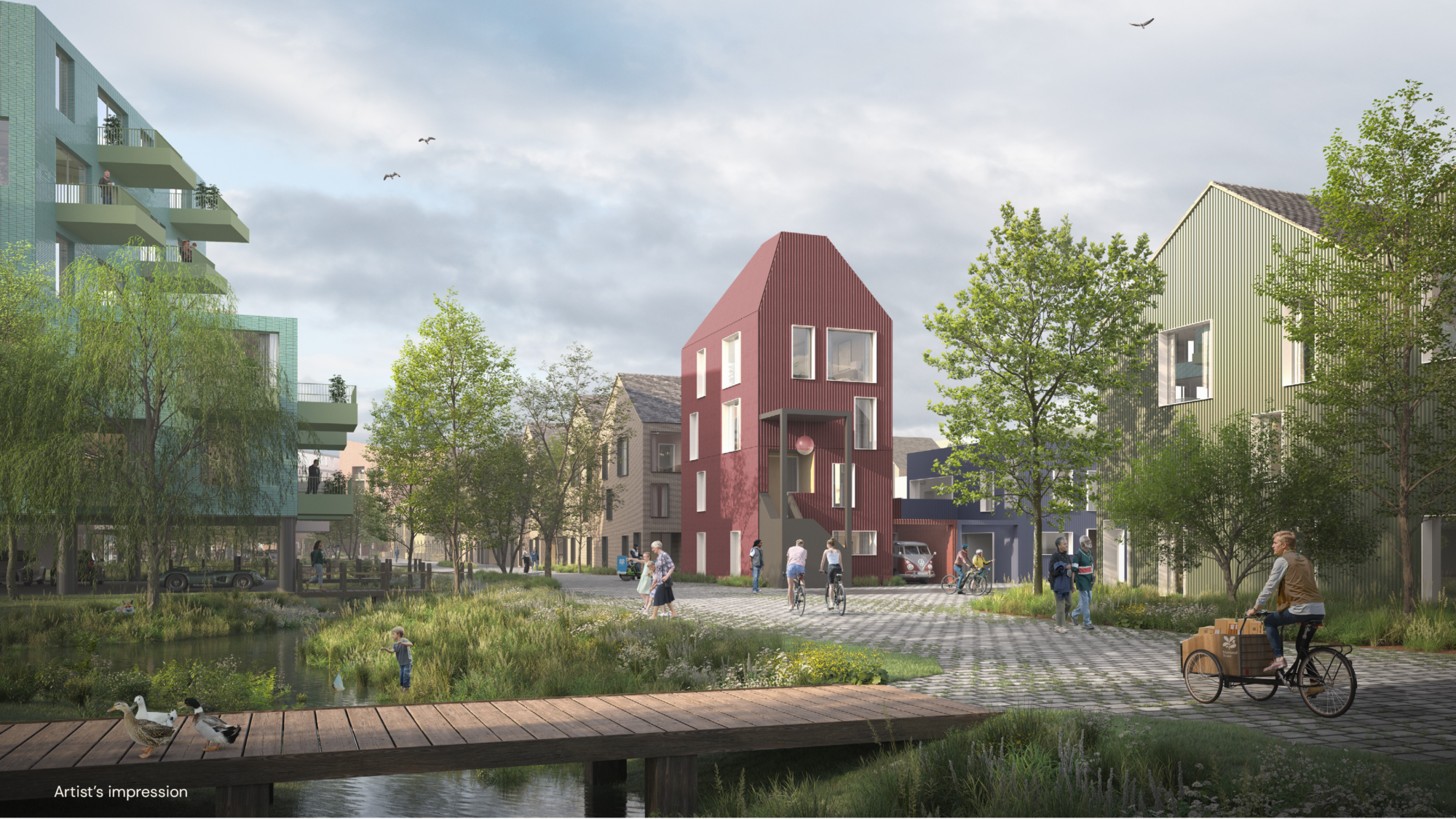
The headline public offer is highly sophisticated and deliberately diverse. The first phase alone is projected to deliver 440 homes featuring 34 distinct architectural typologies . The delivery mechanism is structured around a "coalition of developers" model, integrating specialist sub-developers to provide a resilient tenure mix. Within this coalition, Alpha Living is designated to deliver an 80-bed extra-care facility, the Regenda Group will manage 110 affordable homes (achieving a 25% affordable provision that surpasses the council's 20% baseline target), TOWN will deliver a pioneering co-housing scheme, and Starship will introduce Modern Methods of Construction (MMC) to ensure high environmental performance .
For the regional housing market, the Festival Gardens development will exert a highly localised and differentiated effect. The L17 district, encompassing the established neighbourhoods of Aigburth, Sefton Park, and St Michaels, is already an established premium market. Local property data from early 2026 indicates that median house prices in L17 stand at £247,500, positioned significantly above the broader Liverpool city average of £177,000 . The addition of 800 high-specification, sustainable homes adjacent to a newly created 24-acre park and the River Mersey should establish a new valuation ceiling for the South Liverpool waterfront. However, the investment profile here is definitively capital-and-stability led, rather than income-driven. Local rental data indicates that while tenant demand in premium waterfront locations is deep and resilient, the high capital entry costs severely compress gross income ratios compared to cheaper, higher-risk urban neighbourhoods in north and east Liverpool .
Ultimately, the principal execution risk for the development is no longer the subterranean condition of the land, but rather the navigation of the 2026 planning process, the management of abnormal foundation costs, and the subsequent phasing of construction in a sensitive macroeconomic environment. If the Urban Splash and igloo coalition successfully transitions from the late-2026 planning phase to vertical construction in 2027, Festival Gardens will likely become the benchmark for sustainable, suburban-waterfront living in the Liverpool City Region through the 2030s.
Project overview
The Festival Gardens site sits within a much wider 90-acre waterfront estate situated approximately five kilometres (three miles) south of Liverpool's commercial city centre. The site's history is deeply embedded in Liverpool's modern civic identity and industrial transition. Originally part of the natural shoreline known as Jericho Beach, the land was subsequently utilised throughout the mid-twentieth century as an oil refinery and a vast municipal waste facility . In 1984, the site underwent a dramatic, government-backed transformation to host the United Kingdom's first International Garden Festival. The event, opened by Queen Elizabeth II, attracted over 3.4 million visitors and acted as a major psychological and economic catalyst for Liverpool's post-industrial regeneration following a period of profound civic unrest (Source: Urban Splash).
Following the closure of the 1984 festival, the site experienced decades of fragmentation, ownership disputes, and dereliction, punctuated only by short-lived leisure uses such as the Pleasure Island amusement park (Source: Urban Splash). While the formal oriental gardens (featuring Japanese and Chinese landscaping) were partially restored and reopened as a public park in 2011, the much larger northern development zone remained heavily contaminated, fenced off, and unusable for residential development .
The contemporary regeneration era began in earnest when Liverpool City Council strategically acquired the site for £6m in 2015 . Recognising that private developers could not unilaterally absorb the immense abnormal costs of clearing a historic municipal landfill, the public sector intervened heavily to unlock the land. Between early 2021 and the summer of 2023, the principal contractor VINCI Building executed one of the largest and most complex excavation and remediation programmes in the United Kingdom .
Supported by a £53m tripartite funding package assembled by Liverpool City Council, the Liverpool City Region Combined Authority (LCRCA), and Homes England, the engineering works involved the removal, screening, and processing of more than 400,000 cubic metres of soil and historic waste .
Crucially, the remediation works achieved two permanent, tangible civic outcomes that serve as the foundation for the current residential masterplan. First, the project operated with a remarkable sustainability profile; more than 95% of the excavated material was recycled on-site . This included 100,000 cubic metres of earth that was repurposed to sculpt "Southern Grasslands," a massive new 24-acre public park featuring 30-foot rolling hills, 5,700 new trees, and sweeping, elevated views of the Mersey estuary . This park opened to the public in August 2023, immediately enhancing the amenity value of the adjacent development land.
Second, the remediation works created a certified, thoroughly de-risked 27-acre primary development platform. As part of this enabling phase, strategic surface water drainage infrastructure and a new 10MVA electrical substation were installed to serve the future residential scheme, eliminating major utility bottlenecks that typically delay large-scale brownfield regeneration .
Today, the wider 36-hectare estate is divided into three distinct legal and spatial zones, each fulfilling a specific civic or commercial function:
| Zone Designation | Scale | Current Status and Primary Function |
|---|---|---|
| The Gardens | 25 acres | The restored oriental gardens, preserving the heritage of the original 1984 International Garden Festival. Actively managed as a public amenity . |
| Southern Grasslands | 24 acres | A radically re-landscaped eco-haven and recreational green space, sculpted from remediated earth. Opened to the public in August 2023 . |
| The Development Zone | 27 acres (11 ha) | The remediated brownfield plot designated for the 800-home Urban Splash and igloo masterplan. The primary focus of commercial investment . |
Official scheme details and delivery timeline

The appointment of the master development partners in the third quarter of 2025 marked the definitive transition from public-sector site preparation to active residential planning. Following a competitive procurement dialogue process managed by the property consultancy Montagu Evans, Liverpool City Council's cabinet formally approved an overarching development agreement on 16 September 2025 with a joint venture formed by Urban Splash and igloo Regeneration (Source: Invest Liverpool). This consortium decisively beat competing bids from established regeneration powerhouses such as Muse, Vistry, and CERT Property .
The official scheme parameters represent a conscious, strategic departure from standard, monocultural volume housebuilding. The developers are advancing a "festival of housing" concept, designed to blend outstanding architectural design, rigorous environmental sustainability standards, and integrated community life.
The most distinctive feature of the delivery mechanism is the "coalition of developers" model. Rather than relying on a single national housebuilder to deliver hundreds of identical units, a model that often struggles with absorption rates and market saturation, Urban Splash and igloo are acting as master-developers, curating a panel of specialised delivery partners for distinct plots (Source: Invest Liverpool).
The current validated parameters of the scheme, sourced directly from the latest cabinet reports and developer announcements, are detailed in the table below:
| Project Parameter | Verified Official Details |
|---|---|
| Total residential scale | Capped at a maximum of 800 homes across the entire 27-acre development zone, representing a significant density reduction from earlier masterplans (Source: Urban Splash). |
| Phase One scope | The initial planning application will encompass 440 homes (Source: Urban Splash, Invest Liverpool). |
| Affordable housing provision | Phase One will include 110 affordable homes, representing a 25% affordable ratio that far surpasses the council's 20% statutory target. This element will be delivered and managed by the Regenda Group (Source: igloo Regeneration). |
| Later living and extra care | Phase One will include an 80-bed extra-care facility, specifically delivered by Alpha Living, to cater to aging demographics and facilitate local downsizing (Source: igloo Regeneration). |
| Co-housing integration | The developer TOWN is designated to deliver a bespoke co-housing scheme, focusing on intentional communities, shared resources, and neighbourly living . |
| Construction methodology | The developer Starship will introduce Modern Methods of Construction (MMC), focusing on advanced off-site manufacturing to ensure zero-carbon-ready homes . |
| Architectural diversity | The masterplan proposes 34 different housing styles across the site, ranging from apartments to large family townhouses. Six independent architecture practices have been engaged to ensure a varied streetscape (Source: Invest Liverpool). |
The indicative delivery timeline is structured around a sequential de-risking process. According to the development partners, comprehensive public consultation and detailed design refinement will occur throughout 2026. Pending cabinet finalisation and the conclusion of these consultations, a full planning application for the 440-home Phase One is expected to be submitted to Liverpool City Council in late 2026 (Source: Urban Splash, Invest Liverpool).
Assuming standard statutory determination periods, the successful negotiation of Section 106 contributions, and the discharge of pre-commencement conditions, vertical construction is slated to begin in the spring of 2027. Following the completion of Phase One, subsequent phases (delivering the remaining balance of up to 360 homes) will be brought forward, with total project completion anticipated in the early 2030s (Source: Invest Liverpool).
Planning, infrastructure and transport context

Planning framework and the spatial masterplan
The planning foundation for Festival Gardens is remarkably robust compared to highly speculative land assemblies. It is heavily supported by the Draft Liverpool Local Plan 2025-2041, which explicitly names and allocates the site as a priority location for a new, sustainable, mixed-use neighbourhood . While the site borders designated Open Space and a Local Wildlife Site, the remediated development zone formally meets the National Planning Policy Framework (NPPF) definition of 'previously developed land', creating a strong statutory presumption in favour of sustainable residential redevelopment .
To guide the incoming developers and ensure alignment with the city's civic ambitions, a multi-disciplinary team comprising Mace, Montagu Evans, Metropolitan Workshop, shedkm, and Arup published a comprehensive Development Brief in October 2024 . This critical document discourages rigid, uniform zoning in favour of eight interconnected, distinct "character areas." The design philosophy dictates that the architecture should respond to the immediate topography and proximity to the river, creating a varied urban grain.
The eight character areas, as defined by the official Development Brief, outline the spatial strategy for the site:
| Character Area | Primary Function and Design Concept |
|---|---|
| 01 Community Park | Situated in the centre of the site where primary routes converge and the riverside bunds are lowest. Designed as the social heart and central public square of the scheme . |
| 02 Community Heart | Features taller apartment buildings (potentially up to 12 storeys in specific nodes) that frame the central park, integrating supplementary ground-floor commercial or community uses . |
| 03 Neighbourhood Hub | Acts as the primary gateway to the development from Riverside Drive. Proposes increased building heights to mark the entrance and includes a "mobility hub" for green transport, alongside convenience retail. Highly suitable for later-living typologies . |
| 04 River View | Characterised by sculptural, medium-rise apartment pavilions set within mature retained planting. Specifically designed to offer unencumbered sightlines across the River Mersey . |
| 05 Pathway to the Gardens | Tucked between the dense heart of the development and the historic 1984 oriental gardens. Aimed squarely at family living with medium-density housing and low-traffic streets . |
| 06 Riverside Drive North | Located near existing communities and the St Michaels train station. Characterised by a denser streetscape of lower-rise duplex apartment blocks and smaller family townhouses, targeting young professionals . |
| 07 Riverside Drive West | Secluded from the main vehicular thoroughfares, this parcel is dedicated to multi-generational and extra-care homes, centred around highly managed, shared communal gardens . |
| 08 The Prom | Located beyond the primary remediated residential area, this zone retains mature trees and grasslands. Designed for biodiversity net gain, woodland trails, and community event spaces . |
Infrastructure and environmental engineering
Because the development zone is a former municipal landfill, significant subterranean engineering constraints dictate the viability and physical form of the housing. While the £53m public-sector remediation successfully secured an NHBC Land Quality Endorsement (LQE) certificate, future residential structures are not entirely free from environmental mitigation. The Development Brief explicitly notes that all new homes must incorporate CS3-classified gas protection membranes, and all landscaped areas must be capped with a minimum of 600mm of clean cover soil to prevent exposure to historical sub-surface contaminants . Furthermore, the ground conditions dictate that most vertical construction will require deep piled foundations, which introduces substantial abnormal costs into the developer's viability models .
From a flood-risk perspective, the site's immediate proximity to the Mersey Estuary places portions of the wider environment in Flood Zone 3. However, the site's topography, artificially elevated during the extensive remediation process, and the implementation of below-ground attenuation tanks heavily mitigate this risk. Any forthcoming planning application will require a rigorous, site-specific Flood Risk Assessment detailing finished floor levels and Sustainable Urban Drainage Systems (SuDS). The categorisation of the upper residential floors as 'less vulnerable' development, combined with the extensive permeable green infrastructure, provides deep resilience against extreme weather events .
Transport and connectivity
Festival Gardens is situated roughly 5km south-east of Liverpool's commercial core, making transport integration a paramount concern for maintaining the area's premium suburban appeal. The site benefits from exceptional existing heavy-rail access; it is located approximately 500 metres (a five-minute walk) from St Michaels Merseyrail station, which provides direct, high-frequency access to Liverpool Central in under ten minutes .
The primary vehicular access for the new neighbourhood will be via a four-arm roundabout at the junction of Riverside Drive and Promenade Gardens. The Development Brief identifies this current junction as sub-optimal for active travel and mandates that developers upgrade the intersection to prioritise pedestrian and cyclist safety . A new signalised "sparrow crossing", which safely segregates pedestrians and cyclists, has already been installed on Riverside Drive to facilitate access to the waterfront .
The broader transport strategy heavily leans on the "20-minute neighbourhood" urban planning concept. The aim is to radically reduce private vehicle dependency through the provision of an on-site mobility hub, integrated car clubs, and extensive cycle routes linking seamlessly to the 2.3km Otterspool Promenade . This micro-strategy aligns perfectly with the Liverpool City Region Combined Authority's macro-strategy, backed by a £710m transport infrastructure fund, which seeks to create a London-style integrated transport network across Merseyside . In support of these goals, Liverpool City Council is also procuring a £100m highways professional services framework to support sustainable transport planning across the region through to the late 2020s .
Local economy implications
The economic implications of the Festival Gardens regeneration must be assessed across two distinct phases: the capital-intensive construction lifecycle and the long-term operational impact of the stabilised neighbourhood.
During the construction phase, delivering 800 highly specified, eco-friendly homes on a complex waterfront site will require sustained capital expenditure over an estimated seven to ten years. While the developer consortium has not published explicit job-creation forecasts, standard industry multipliers for a residential scheme of this scale, likely representing well over £150m in Gross Development Value (GDV), indicate it will support hundreds of direct construction jobs annually. Beyond direct employment, the project will generate deep supply-chain procurement across Merseyside. The specific involvement of Starship, an advanced manufacturing firm specialising in zero-carbon modular homes, signals a targeted economic boost for the region's emerging low-carbon, off-site construction sector, anchoring high-tech manufacturing skills within the local economy .
In its operational phase, the current Festival Gardens masterplan marks a profound strategic pivot for the local economy. Earlier 2016-2018 masterplans proposed transforming the site into a regional tourism hub containing a 500,000 sq ft commercial zone and the UK's largest indoor waterpark . By formally abandoning these highly capital-intensive, high-risk leisure plans, the economic profile of the site has narrowed but solidified. Festival Gardens is no longer conceived as a transient employment destination; it is an affluent, residential tax-base expansion.
The integration of minor convenience retail, a mobility hub, and an 80-bed extra-care facility will create a modest number of permanent service-sector and healthcare jobs. However, the primary economic value of the development lies in its ability to retain high-earning professionals, entrepreneurs, and established families within Liverpool's municipal boundaries, rather than losing them to the broader commuter belt. This demographic retention directly increases local consumption, supports high-street vitality in nearby areas like Lark Lane, and expands the council tax base.
Furthermore, the project serves as a critical asset in Liverpool's wider inward investment narrative. The LCRCA continues to showcase Festival Gardens at premier global real estate forums, such as MIPIM, positioning it as a flagship component of an £11bn regional development pipeline alongside megaprojects like Liverpool Waters and the Knowledge Quarter . Success at Festival Gardens serves as a powerful, visible proof-of-concept for the city's ability to execute complex public-private brownfield regeneration, thereby enhancing regional investor confidence.
Housing market implications
Liverpool's broader housing market presents a narrative of steady, affordable growth relative to the UK average, though highly fragmented by geography. According to data from the Office for National Statistics (ONS), the provisional average house price in Liverpool was £177,000 in February 2026, representing a 3.6% annual increase . First-time buyers paid an average of £163,000, underscoring the city's broad accessibility . Growth across the city is currently differentiated by product type: detached properties averaged £373,000, semi-detached properties £225,000, terraced properties £168,000, and flats/maisonettes lagged at £122,000 .
However, treating Liverpool as a monolithic property market is analytically flawed. Festival Gardens is situated in the L17 postcode district (encompassing Aigburth, St Michaels, and Sefton Park), which is unequivocally one of the city's most affluent, high-demand, and supply-constrained residential corridors. Market data from April 2026 highlights the severe pricing disparity between this premium micro-market and the wider city.
The table below outlines the specific metrics for the L17 market context based on recent sales evidence:
| Market Metric | L17 District Context (April 2026) |
|---|---|
| Median House Price | £247,500 |
| Average Property Price | £280,624 (reflecting a 20.4% increase over a five-year period) |
| Price per Square Metre (Median) | £2,880 per sqm |
| Price per Square Metre (Middle 50% range) | £2,410 to £3,370 per sqm |
| L17 9 Micro-Sector Growth | 8.1% nominal annual growth (4.8% inflation-adjusted 'real' growth) in the specific waterfront-adjacent sector |
The introduction of up to 800 premium, new-build, eco-friendly homes into this specific micro-market will undoubtedly command a waterfront and "green premium" over older, energy-inefficient secondary stock in the surrounding streets. Townhouses with unencumbered views of the Mersey, or properties immediately adjacent to the 24-acre Southern Grasslands, will likely rank among the most expensive residential assets in South Liverpool upon completion. The Development Brief's mandate for exceptional design and net-zero operational standards further underpins this premium valuation.
Yet, from a rigorous investment perspective, this does not guarantee unrestrained localized price inflation. The addition of 440 homes in Phase One represents a highly significant supply injection into a relatively constrained suburban market. By satisfying deep, pent-up demand for high-quality family housing, extra-care facilities, and modern apartments in South Liverpool, the new supply should act as a moderating force on the wider L17 pricing curve over the medium term. The net effect will be a stabilization of the local market's extreme supply-demand imbalance, accompanied by the establishment of a high-value anchor asset, rather than the inflation of a speculative local bubble. For homeowners considering selling older stock in the area, the general trend indicates that energy efficiency (EPC ratings) and turnkey presentation are becoming critical differentiators as buyers compare secondary stock against incoming new-build supply .
Rental market implications
Liverpool's private rental sector is robust and expanding. The ONS reports that the average monthly private rent across the city reached £893 in March 2026, representing a strong 6.4% year-on-year increase . Breaking this down by property type, typical one-bedroom units average £672, two-bedrooms £819, three-bedrooms £941, and properties with four or more bedrooms command £1,270 per month .
For investors analysing Festival Gardens for potential buy-to-let (BTL) deployment, these headline rental metrics must be interpreted with extreme caution. Liverpool is renowned nationally as a high-income-return city, heavily marketed to domestic and overseas investors on the promise of robust gross yields. However, those headline metrics are generated in lower-entry-cost, higher-risk areas like Kensington, Everton, Vauxhall, or Wavertree. In those neighbourhoods, sub-£100,000 purchase prices mathematically produce gross income ratios frequently exceeding 7% .
Festival Gardens, by contrast, sits in a premium waterfront and park-side demographic. Independent market analysis models from 2026 indicate that the Liverpool waterfront is fundamentally the weakest area in the city for pure gross income returns . Because the capital entry price for a new-build, eco-specification, waterfront apartment or townhouse will be substantially higher than the city average, the resulting income-to-price percentage is naturally compressed. For example, a modelled two-bedroom waterfront apartment purchased for £250,000 and renting for £1,400 per month yields a gross return of 6.7%, but once service charges, management, and maintenance are factored in, the net yield typically compresses to around 4.1% .
Consequently, Festival Gardens should not be targeted by retail investors seeking maximum immediate cashflow or high-yield BTL arbitrage. Instead, its rental profile is highly suited to institutional Build-to-Rent (BTR) operators and private investors prioritizing long-term capital preservation, minimal void periods, and premium tenant profiles. The likely tenant base will comprise medical professionals from the nearby Knowledge Quarter, academics from the city's universities, and established families seeking suburban amenities with rapid city-centre connectivity. The site's active-travel links, immediate proximity to St Michaels station, and vast 24-acre green space heavily insulate its desirability against broader market downturns, offering defensive stability rather than aggressive yield.
Supply, demographics and demand drivers

Liverpool's estimated population in 2024 stood at 508,961, having grown by a healthy 1.4% since the 2021 census . Retaining and accommodating this growing population requires targeted, structurally sound housing interventions, particularly in highly desirable areas where lack of supply forces residents to relocate outside the city.
The demographic strategy of the Festival Gardens masterplan is arguably one of its strongest attributes. By pursuing a strictly multi-generational approach, the scheme avoids the saturation and transiency risks associated with monolithic city-centre apartment blocks that target solely young professionals. The demand drivers are carefully segmented:
- The Golden Agers: Alpha Living's commitment to delivering an 80-bed extra-care facility directly addresses the aging population curve. By providing high-quality retirement, assisted living, and care home options within an active, integrated community, the scheme facilitates downsizing. This is vital, as it frees up existing, under-occupied larger family homes in the wider L17 area for the next generation .
- Families and Upsizers: The provision of three- and four-bedroom townhouses, duplexes, and terrace homes, particularly within the "Pathway to the Gardens" character area, caters to families wishing to remain within the city bounds. The low-traffic streets and immediate park access are major demand drivers for this demographic .
- Affordable Demand: The inclusion of 110 affordable homes in Phase One (managed by the Regenda Group) is a critical civic intervention. With over 12,000 households currently on Liverpool's housing waiting list, the delivery of genuine social rent and intermediate products directly supports civic stability and ensures the waterfront is not exclusively gentrified (Source: igloo Regeneration).
- Intentional Communities: The developer TOWN's co-housing model taps into an emerging, highly resilient market segment. Co-housing prioritises shared resources, community gardens, and collaborative living. While the UK only has roughly 25 completed co-housing schemes (compared to over 600 in Denmark), the model ensures deep tenant and owner roots in the neighbourhood, fostering high community cohesion .
Scenario outlook and delivery path
The table below provides an analytical scenario model for the 800-home full build-out. This is an independent projection based on current stated capacities, Liverpool's baseline demographic data, and micro-market analysis; it is not an official developer forecast. It assumes a base average occupancy of 1.8 to 2.2 persons per dwelling across the diverse unit mix.
| Scenario | Homes delivered by 2034 | Additional residents | Likely waterfront sales premium vs L17 average | Local market rental ratio profile | Demographic weighting |
|---|---|---|---|---|---|
| Pessimistic (Macro headwinds slow Phase 2 & 3) | 440 (Phase 1 only) | 790 - 960 | 5% - 8% | Moderate (compressed by high entry prices) | Skewed towards affordable & extra-care baselines |
| Central (Steady multi-phase absorption) | 600 - 700 | 1,080 - 1,540 | 8% - 12% | Moderate to Low (capital appreciation led) | Balanced multi-generational mix |
| Optimistic (Full acceleration via MMC deployment) | 800 | 1,440 - 1,760 | 12% - 15%+ | Low (premium capital valuations dominate) | High retention of affluent young families |
Investor watchpoints and risks
While the £53m physical remediation of the land heavily de-risks the site compared to standard brownfield acquisitions, several material execution and market risks remain for investors to monitor closely over the next 24 to 36 months:
1. Planning and Statutory Delays: The project benefits from broad political support and structural alignment with the draft Local Plan, but it does not yet possess detailed planning permission. The submission of the Phase One application in late 2026 will inevitably attract intense local scrutiny regarding traffic generation on Riverside Drive, ecological impacts on the Mersey estuary, and precise building heights in the denser "Community Heart" zone. Any protracted negotiations over Section 106 developer contributions, or prolonged disputes over highways mitigation, could easily delay the anticipated spring 2027 construction start .
2. Viability and Abnormal Costs: Festival Gardens is not a clean greenfield site. Despite the massive public remediation effort, developers must still install robust gas protection membranes and utilise expensive piled foundations for structural stability . When these abnormal ground costs are combined with the ambitious net-zero architectural specifications, the use of advanced MMC delivery, and a high 25% affordable housing baseline in Phase One, the master developer's profit margins will be structurally tight. If build-cost inflation spikes globally, or if local end-values stagnate, later phases (Phases Two and Three) could face severe viability challenges requiring either further public subsidy or density renegotiations.
3. Infrastructure Sequencing: The success of the "20-minute neighbourhood" concept relies implicitly on high-quality public and active transport arriving *before* the residents. If the integration of the mobility hub, the improvements to St Michaels station pathways, and the Riverside Drive junction upgrades lag behind residential occupation, the scheme risks generating severe localized traffic bottlenecks. This would degrade the premium suburban appeal of the location and agitate the surrounding L17 community .
4. Macroeconomic Exposure: The delivery timeline relies heavily on securing institutional funding and private buyer commitments in the 2027-2034 window. The scheme's premium pricing tier makes it highly sensitive to long-term mortgage interest rates. A sustained high-rate environment through the late 2020s would heavily compress purchasing power for the target demographic, potentially slowing the absorption rate of the open-market family homes and premium apartments.
In conclusion, Festival Gardens is a highly credible, well-capitalised regeneration initiative that has successfully shed its unviable historic baggage in favour of sustainable, community-focused housing. For investors, it represents a generational upgrade to the South Liverpool waterfront, acting as a robust vehicle for long-term capital preservation and demographic stability rather than a mechanism for short-term, high-yield cashflow.