
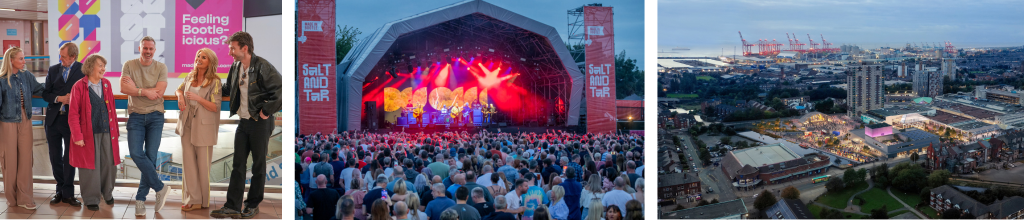
The Bootle Town Centre Regeneration programme represents a pivotal structural shift for the L20 postcode district, transitioning the area from a legacy retail-dependent economy toward a mixed-use civic, cultural, and residential hub. As of mid-2026, the strategic position of Bootle is robustly defined by two major milestones: the formal adoption of the Bootle Area Action Plan (AAP) by Sefton Council in January 2026, and the successful completion of the first phase of demolition at The Strand in March 2026.
The analytical consensus is that the Bootle regeneration has moved decisively from a conceptual masterplan to an active, well-capitalised delivery phase. Backed by a diverse public funding stack, including £20 million from the central government's Levelling Up Fund, £7.1 million from the Liverpool City Region Combined Authority (LCRCA), and £10 million from Sefton Council, the immediate financial execution risk for Phase 1 has been mitigated. The core physical intervention revolves around the partial demolition of the 1968-built Strand Shopping Centre, clearing 5,755 sq m of obsolete space to create a new civic square (Mons Square), improved canal-side connectivity, and repurposed commercial infrastructure.
For property investors, the baseline metrics present a distinct micro-market profile. Based on recent transactional data for the L20 district, the median house price stands at £98,800 (as of February 2026). This is a highly accessible entry point relative to broader Liverpool City Region averages, offering significant headroom for cautious capital preservation and yield generation. The medium-to-long-term effect of the regeneration is likely to be twofold. In the immediate vicinity of the town centre and the Leeds-Liverpool Canal, the introduction of high-quality public realm, expanded leisure amenities (anchored by the Salt and Tar events space), and active travel corridors should stimulate localized property value stabilization and a gradual "regeneration premium."
However, across the wider L20 district, the AAP's target of delivering 1,500 new homes by 2040 (averaging 94 homes per year) represents steady, controlled supply. This delivery rate is likely to moderate acute price inflation while systematically improving the overall quality of the housing stock. The institutional rental market has already recognised the potential of the broader corridor, evidenced by Aviva Capital Partners funding 110 Build-to-Rent properties at the nearby Vescock Street development.
My central judgement is that the primary execution risk has shifted from initial funding procurement to sustained, multi-phase delivery. While Phase 1 is secure and advancing toward a targeted Spring 2027 completion, the programme is outlined across four distinct phases stretching to 2031. The continued momentum of Phases 2 through 4 will heavily depend on private sector co-investment, commercial tenant absorption, and macroeconomic stability. Furthermore, the central government's recent rejection of the wider 10,000-home "Liverpool North New Town" bid underscores the reality that Bootle's revival relies on robust local authority partnerships and piecemeal site delivery rather than a massive, centrally funded development corporation.
2. Project overview

The Bootle Town Centre Regeneration is fundamentally anchored by the radical physical and economic reshaping of The Strand Shopping Centre, a 400,000 sq ft complex originally opened in 1968. Like many mid-century monolithic retail assets across the UK, The Strand suffered from structural decline due to a combination of shifting consumer habits, the rapid expansion of e-commerce, and prolonged historical underinvestment by its previous private owners. Recognising that municipal control of the town's core economic asset was essential to unblock broader civic revival, Sefton Council acquired The Strand in 2017 for £32.5 million, financed via the Public Works Loan Board.
The council's strategy represents a calculated pivot away from attempting to artificially revive an oversized, outdated retail footprint. Instead, the focus is on rightsizing the retail offer, introducing new health, education, and community services, and fundamentally reorienting the town centre's physical flow to face the Leeds and Liverpool Canal. This is an attempt to transition Bootle from a monocentric retail destination into a polycentric "cultural ecosystem."
A critical, and highly successful, component of this strategy has been the deployment of "meanwhile uses" to prove concept viability, test market demand, and rebuild civic engagement before committing to irreversible permanent structures. The Salt and Tar events space, developed on cleared canal-side land, has acted as a primary catalyst. In August 2025, the venue hosted a Music Weekender featuring high-profile acts that drew nearly 12,000 attendees to the town centre over four days. This empirical evidence of substantial latent demand for leisure and cultural programming in Bootle has derisked the subsequent planning phases. The success of Salt and Tar has now been integrated into the permanent masterplan, with feasibility and detailed design work currently underway to expand the venue into a 7,000-person capacity permanent space.
The broader spatial narrative for Bootle is one of structural un-locking. By demolishing obsolete, vision-blocking structures like the Palatine block and the Mayflower Pub, the project physically breaks open the concrete collar of the 1960s architecture. This creates new physical sightlines and intuitive pedestrian flows between the traditional high street (Stanley Road), the newly formulated Mons Square, and the waterfront. The intended economic outcome is to increase organic footfall, extend consumer dwell times, and foster a localized circular economy that serves the immediate community while generating a measured level of inward investment.
3. Official scheme details and delivery timeline
The transformation of The Strand and the immediate Bootle town centre is officially structured across four phases, targeting overall completion by 2031. Phase 1 is currently active, fully capitalized, and actively moving from site clearance into vertical construction and public realm delivery.
The public-facing components of the scheme represent a complex blend of demolition, repurposing, and new public realm generation. The most defensible current project capacities, drawn from official Sefton Council updates and planning documents, are outlined below.
| Project Component | Best-Supported Current Position |
|---|---|
| Development Role | The primary civic, retail, and leisure anchor for the Bootle AAP area. |
| Funding Stack (Phase 1) | £20m UK Government Levelling Up Fund; £7.1m LCRCA Strategic Investment Fund; £10m Sefton Council capital. |
| Demolition Scope | 5,755 sq m footprint removed, comprising the Palatine block, upper-floor vacant residential units, Mons Square canopy, and the Mayflower Pub. |
| Public Realm | Creation of a new, fully accessible civic space (Mons Square), terraced gardens addressing legacy level changes, and comprehensive canal-side landscaping. |
| Commercial Repurposing | Retention of the former Marks & Spencer building, transitioning into a mixed-use asset: 7,700 sq ft for food/beverage operators, 5,300 sq ft for exhibitions, and 14,300 sq ft for community use. |
| Circular Economy Metrics | Over 8,000 tonnes of brick and concrete processed on-site for reuse as engineering fill; retention of over 60 tonnes of steel; non-recyclables diverted to Energy to Waste systems. |
| Civic Amenities | Installation of modern public toilet facilities, including a Changing Places accessible toilet, baby feeding room, and multi-faith space. |
| Events Infrastructure | Upgrading Salt and Tar towards a 7,000-capacity permanent venue (currently exploring feasibility for integration into underused Strand space). |
A vital operational reality is that the Strand Shopping Centre will remain open to the public throughout the construction phases. This mitigates the risk of complete commercial failure for existing tenants and preserves baseline footfall during the disruption period.
Because the central construction footprint for Phase 1 overlaps with the existing events space, the Salt and Tar programming will go "on tour" in 2026, temporarily relocating to the Lock and Quay site (2 Irlam Road) to maintain cultural momentum without impeding heavy civil works.
The delivery timeline for the active and near-term phases is well-documented by the lead contractor, VINCI Building, and the local authority. Following the successful completion of the primary demolition package in March 2026, the site transitioned to enabling works and detailed design preparations for the public realm.
| Project Phase | Key Milestone | Estimated Timing | Current Status |
|---|---|---|---|
| Phase 1 | Demolition of Palatine Block & Mayflower Pub | May 2025 - March 2026 | Completed |
| Phase 1 | Enabling works, groundworks, and utility routing | Spring 2026 | Active |
| Phase 1 | Main construction (Mons Sq & M&S repurposing) | Summer 2026 - Spring 2027 | Projected |
| Phase 1 | Practical completion and opening of new public realm | Spring / Summer 2027 | Projected |
| Phases 2, 3, & 4 | Refurbishment of retained retail core and wider integration | 2027 - 2031 | Subject to planning & funding |
4. Planning, infrastructure and transport context
The regulatory and legal backbone of the Bootle regeneration is the Bootle Area Action Plan (AAP), which was formally adopted by Sefton Council on 15 January 2026. This adoption followed a rigorous period of public consultation and a successful examination by an independent Planning Inspector. The AAP covers 833.5 hectares (5.38% of the Metropolitan Borough of Sefton) and formally establishes the statutory development plan for the area through to 2040.
For property investors, the adoption of the AAP is a highly significant de-risking event. By formally codifying regeneration zones, confirming housing allocations, and setting environmental standards, the AAP removes much of the speculative planning risk that typically hinders institutional investment in post-industrial areas. The AAP supersedes older local plan policies, providing a modern, climate-conscious, and commercially realistic framework for development.
Transport and connectivity investments are operating in tandem with the physical town centre works. While the Bootle New Strand rail station is geographically proximate to the shopping centre, historical access routes have been highly indirect, requiring pedestrians to navigate heavily trafficked ring-road infrastructure. To address this, Sefton is deploying a £38 million Bootle Town Centre accessibility and connectivity scheme, supplemented by a £22 million allocation for the Sefton Local Cycling and Walking Infrastructure Plan.
Immediate, localized highway improvements are already advancing. Key works include the replacement of the Vermont Way mini-roundabout with intelligent traffic signals (relocating the Strand Car Park exit to connect directly to Vermont Way) and the widening of the Washington Parade junction to reduce bottlenecks. Both projects were programmed for completion in early 2026.
At the regional rail level, the Liverpool City Region Combined Authority is advancing its ambition to make the Merseyrail network entirely step-free by 2030. Bootle New Strand station is integrated into this wider accessibility strategy, which aligns with the Department for Transport's Access for All (AfA) programme to ensure stations can accommodate an ageing demographic and those with mobility needs, directly supporting the residential growth envisioned in the AAP.
The regeneration must also be contextualised within a complex sub-regional political landscape. Throughout 2025, Liverpool City Region leaders aggressively lobbied for a massive 10,000-home "Liverpool North" New Town designation, a continuous regeneration corridor stretching from Everton's new Bramley-Moore Dock stadium through Kirkdale and directly into Bootle.
However, in early 2026, the Ministry of Housing, Communities, and Local Government declined to include Liverpool North in its final New Towns programme. The official rationale stated that the dense, built-up nature of the brownfield area restricted its ability to expand significantly beyond the 10,000-home minimum. While this means the area will not benefit from a centrally funded, state-backed development corporation, Liverpool City Council, Sefton Council, and the LCRCA have publicly committed to advancing the cross-boundary regeneration strategy independently. The practical implication for investors is that delivery will rely on sequential, locally-brokered public-private partnerships rather than a single sweeping national intervention.
5. Local economy implications
Bootle's local economy has historically faced severe structural headwinds, characterised by low commercial property values, high relative deprivation indices, and an overcapacity of redundant 20th-century retail space. The current interventions aim to stabilize the economic base by actively diversifying employment uses and strategically capturing sub-regional leisure spend that previously bypassed the town.
The most immediate and quantifiable economic impact is driven by active construction. The £30 million Phase 1 capital package represents a significant localized cash injection. The lead contractor, VINCI Building, is operating under a strict Social Value Action Plan coordinated with the Sefton@Work agency. Early reporting indicates that eight full-time roles have been created explicitly for local residents during the demolition phase alone, alongside dedicated work placement weeks and training hours targeting NEET (Not in Education, Employment, or Training) demographics and care leavers.
In the medium term, the repurposed spaces within the former M&S building and the expanded Salt and Tar venue are designed to catalyze a new night-time and leisure economy. By demonstrating an ability to draw visitors from across the wider North West, as evidenced by the 12,000 attendees at the 2025 music weekender, Bootle is positioning itself to capture external discretionary spend. This imported footfall will be essential for underwriting the commercial viability of the independent retail, food, and beverage operators planned for the new Mons Square.
Furthermore, Bootle's economic future is deeply entwined with its proximity to major external economic drivers. The town centre sits just a short active-travel distance along the canal from Everton FC's new £500m waterfront stadium at Bramley-Moore Dock. The AAP explicitly acknowledges the necessity of integrating with North Liverpool's regeneration. The strategic intent is to capture match-day footfall, drive event-based hospitality demand, and support related supply-chain employment.
Additionally, the wider Sefton Economic Strategy highlights the Maritime Corridor Scheme, a phased highway improvement project designed to enhance heavy freight and commuter access between the A5036 Dunnings Bridge Road and the Port of Liverpool. With Phase 1 completed in March 2026 and Phase 2 starting in Summer 2026, these logistics and infrastructure enhancements safeguard Bootle's role as a vital industrial and port-adjacent employment hub, ensuring a balanced economy that does not rely solely on retail and leisure.
6. Housing market implications
For property investors, the L20 housing market presents a highly distinct profile defined by extreme affordability and the potential for targeted, micro-market capital uplift.
Based on closed transactional data from local property platforms, the median house price in the L20 district was £98,800 as of February 2026. This baseline is significantly below the broader Liverpool city average (which sits closer to £177,000) and represents a fraction of national averages. This exceptionally low entry point means that even modest nominal improvements in local amenity, community security, and public realm quality can result in meaningful percentage growth in capital values, provided the execution of the town centre plan aligns with market absorption realities.
The housing market implications of the Bootle Town Centre Regeneration must be analyzed spatially, as the effects will not be uniform across the postcode:
- The Waterfront / Canal-Side Premium: Residential assets in the immediate vicinity of the newly landscaped canal corridor and the emerging Mons Square are likely to experience the most pronounced positive effects. As Salt and Tar establishes itself as a permanent cultural anchor, and as pedestrian connectivity to the Bootle New Strand rail station is upgraded, immediate waterfront and town-centre adjacent stock will benefit from a classic "regeneration premium." The transition of the town centre from a concrete retail monolith to an open, green, civic space directly enhances the kerb appeal of adjacent residential streets.
- The Wider L20 Market: Across the broader district, the value effect will be more gradual and sustained. The Bootle Area Action Plan mandates high environmental and design standards for all new developments. Furthermore, it focuses heavily on reducing anti-social behaviour through better street lighting and passive surveillance in new public spaces. As the general quality of the neighbourhood improves, legacy housing stock will see a slow stabilization in values.
It is crucial to approach price implications cautiously and avoid speculative yield language. The L20 market has historically been driven by localized demand serving existing residents, with limited inward migration. The current regeneration is engineered primarily to improve the quality of life for the existing community and retain upwardly mobile local families, rather than to spark aggressive, high-end gentrification. Therefore, investors should underwrite assets based on current localized comparables and steady, organic wage growth in the maritime/logistics and public sectors, rather than relying on "boom" forecasts or guaranteed uplift claims.
7. Rental market implications
The L20 rental market is characterized by robust fundamental demand for affordable housing, though the condition of the legacy terraced stock is highly variable. The Bootle AAP and the town centre transformation will impact the rental sector primarily through the introduction of diversified, higher-quality new build supply and stricter regulatory enforcement.
The AAP establishes a clear housing target of 1,500 new homes by 2040, which equates to roughly 94 homes per year. From a market perspective, this is a highly sustainable absorption rate. It is sufficient to gradually modernize the local housing stock and provide attractive options for younger professionals and families looking to remain in the area, but it is not large enough to cause a supply-shock that would materially depress local rental values.
The institutional Build-to-Rent (BTR) sector is already recognizing the structural potential of the North Liverpool/Bootle corridor. A definitive leading indicator is the Vescock Street/Limekiln Lane scheme, positioned just south of Bootle within the wider Liverpool North vision. This project, advancing in 2026, involves Aviva Capital Partners funding approximately 110 BTR properties, alongside 25 Rent to Buy homes managed by the registered provider Torus. The deployment of tier-one institutional capital into BTR in this specific corridor validates the rental demand thesis and suggests that high-quality, professionally managed rental stock can achieve viable absorption and premium rents relative to the unmodernised local baseline.
For private investors operating in L20, the strategic imperative will be aligning property standards with the rising expectations generated by the new civic amenities. The local authority is taking an increasingly strict approach to housing enforcement. Recent reports indicate that Sefton Council is actively managing a rigorous housing licensing scheme; by late 2025, the council had received 3,710 housing licence applications and conducted 865 compliance inspections. The council has stated it is taking a "very strict approach with landlords that provide [poor] properties or services."
Consequently, the rental market outlook is clear: well-maintained, compliant properties within active travel distance of the new Strand amenities and transport links will be exceptionally well-positioned to attract reliable tenants and minimise void periods. Conversely, sub-standard stock will face intense regulatory pressure and struggle to compete with incoming new-build supply.
8. Supply, demographics and demand drivers
Understanding the demographic baseline is essential for accurately projecting future property demand in Bootle. The population within the formal AAP boundary is approximately 44,000, accounting for roughly 16% of Sefton's total population.
Historically, Bootle experienced severe population decline associated with deindustrialisation, falling from over 80,000 in 1961 to roughly 51,394 by 2011 (across the wider Bootle & Netherton statistical area). However, this trend has definitively stabilized and reversed, with the population creeping up to over 53,700 by the 2021 census. Crucially for property investors, while the total population fell historically, the *number of households* actually increased by 8.8% between 1991 and 2021. This divergence is driven by a national trend toward smaller household sizes and single-person occupancies, creating sustained demand for residential units even in periods of population stagnation.
Bootle's demographic profile is distinct from the wider Sefton borough. It has a significantly younger population, with a higher proportion of children under 16 and a lower proportion of residents over 65. The AAP's housing supply policies are explicitly tailored to accommodate this profile.
The AAP provides a highly detailed framework for new supply, targeting 1,500 dwellings by 2040. This supply is mathematically broken down into specific allocated sites and windfall allowances:
| AAP Housing Site Allocation | Reference | Estimated Dwellings | Status Notes |
|---|---|---|---|
| Site of former Bootle Gas Works | BH3 | 210 | Major brownfield remediation required. |
| 503-509 Hawthorne Road | BH6 | 158 | Key corridor site. |
| Peoples' site, Linacre Lane | BH1 | 110 | Short-term delivery focus. |
| Site of Litherland House | BH4 | 110 | Planning application for 135 homes received by early 2026. |
| Site of former Johnson's Cleaners | BH5 | 104 | Under construction for affordable homes. |
| Coffee House Bridge | BH2 | 85 | Canal-adjacent allocation. |
| Windfall Sites Allowance | N/A | ~408 | Projected via historical trend of 24 homes per year. |
To ensure this new supply meets actual demographic requirements rather than speculative developer preferences, the AAP enforces strict design and tenure parameters:
- Affordable Housing: Developments of 15 or more dwellings must provide a minimum of 15% affordable housing.
- Market Housing Mix: For schemes of 25 or more new build market homes, a minimum of 25% must be 1- or 2-bedroom properties, and at least 40% must be 3-bedroom properties, reflecting the need to balance starter homes with family housing retention.
- Affordable Housing Mix: At least 25% must be 1-bedroom, 60% 1- or 2-bedroom, and 85% 1-, 2-, or 3-bedroom properties.
- Accessibility: 100% of all new homes must meet the "accessible and adaptable" M4(2) standard, and on large schemes (50+ dwellings), at least 5% must be fully "wheelchair user" M4(3) standard.
These rigid policy mechanisms ensure that incoming supply will be diversified, heavily regulated for quality, and targeted at genuine demographic needs, mitigating the risk of inappropriate, mono-tenure over-supply.
9. Investor watchpoints and risks
While the planning and funding foundations for Phase 1 are robust, the Bootle Town Centre Regeneration carries several execution, commercial, and macroeconomic risks that require careful investor due diligence.
Phasing and Long-Term Funding Risk: The primary physical risk is stalled delivery momentum. Phase 1 is fully capitalized and advancing, but the total transformation relies on four phases executing sequentially through to 2031. Funding for subsequent phases, particularly the comprehensive refurbishment of the retained retail core, will likely require a complex blend of future central government grants, combined authority support, and substantial private sector investment. If macroeconomic conditions tighten or public sector borrowing constraints increase, the later phases could be delayed. This would extend the timeline before the full "place-making" benefits are realized and potentially leave the town centre in a prolonged state of semi-development.
Commercial Tenant Absorption and Curation: The transition from a legacy retail mall to a mixed F&B, leisure, and community ecosystem requires a highly successful tenant leasing and curation strategy. While Sefton Council is actively bringing commercial opportunities to market for the repurposed M&S building, the actual absorption rate of these units by viable, long-term independent operators will dictate the vibrancy of the new Mons Square. Extended commercial vacancies or a failure to attract high-quality operators would dilute the regeneration's impact and fail to generate the necessary footfall to sustain the wider ecosystem.
Social Dynamics and Security Factors: During the September 2024 public consultation, local residents explicitly raised concerns regarding anti-social behaviour and street drinking in the existing town centre. The council is actively mitigating this through physical design (opening up sightlines, improving street lighting) and operational plans (increased security presence, CCTV, and enforcement measures). However, changing the established social dynamics of a deprived town centre is complex. Persistent security issues could deter the intended new demographic of evening leisure visitors and families, undermining the economic rationale of the Salt and Tar expansion.
Macro-level Political Dependency: The failure to secure the formal "New Town" status for the Liverpool North corridor means that cross-boundary infrastructure coordination relies entirely on the continued voluntary alignment of Liverpool City Council, Sefton Council, and the LCRCA. While local political alignment is currently strong, complex inter-council projects inherently carry higher administrative friction than a centralized, heavily funded national development corporation. Investors must monitor local political shifts, as any breakdown in cross-boundary cooperation could isolate Bootle's regeneration from the wider economic uplift generated by the Everton stadium and Liverpool Waters developments to the south.